
CKMath Unit 9: Grade 6 – Putting It All Together
Focus:
This optional unit consists of six lessons. Each of the first three lessons is independent of the others, requiring only the mathematics of the previous units. The last three lessons build on each other.
The first lesson concerns Fermi problems—problems that require making rough estimates for quantities that are difficult or impossible to measure directly (MP4). The three problems in this lesson involve measurement conversion and calculation of volumes and surface areas of three-dimensional figures or the relationship of distance, rate, and time.
The second lesson involves finding approximately equivalent ratios for groups from two populations, one very large (the population of the world) and one comparatively small (a 30-student class). Students work with percent rates that describe subgroups of the world population, e.g., about 59% of the world population lives in Asia. Using these rates, which include numbers expressed in the form or as decimals, they determine, for example, the number of students who would live in Asia—“if our class were the world” (MP2). Because students choose their own methods to determine these numbers, possibly making strategic use of benchmark percentages or spreadsheets (MP5), there is an opportunity for them to see correspondences between approaches (MP1). Because the size of the world population and its subgroups are estimates, and because pairs of values in ratios may both be whole numbers, considerations of accuracy may arise (MP6).
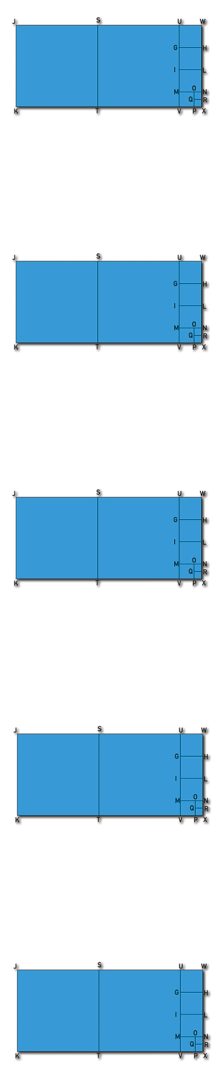
The third lesson is an exploration of the relationship between the greatest common factor of two numbers, continued fractions, and decomposition of rectangles with whole-number side lengths, providing students an opportunity to perceive this relationship through repeated reasoning (MP8) and to see correspondences between two kinds of numerical relationships, and between numerical and geometric relationships (MP1).
The remaining three lessons explore the mathematics of voting (MP2, MP4). In some activities, students chose how to assign votes and justify their choices (MP3). The first of these lessons focuses on proportions of voters and votes cast in elections in which there are two choices. It requires only the mathematics of the previous units, in particular, equivalent ratios, part–part ratios, percentages, unit rates, and, in the final activity, the concept of area. The second of these lessons focuses on methods for voting when there are more than two choices: plurality, runoff, and instant runoff. They compute percentages, finding that different voting methods have different outcomes. The third of these lessons focuses on representation in the case when voters have two choices. It’s not always possible to have the same number of constituents per representative. How can we fairly share a small number of representatives? Students again compute percentages to find outcomes.
Number of Lessons: 6
Instruction Time:
Approximately 50 minutes
(Please note that each lesson is designed for one instructional block, and may be divided into shorter or longer segments based on teacher pacing and student needs.)

