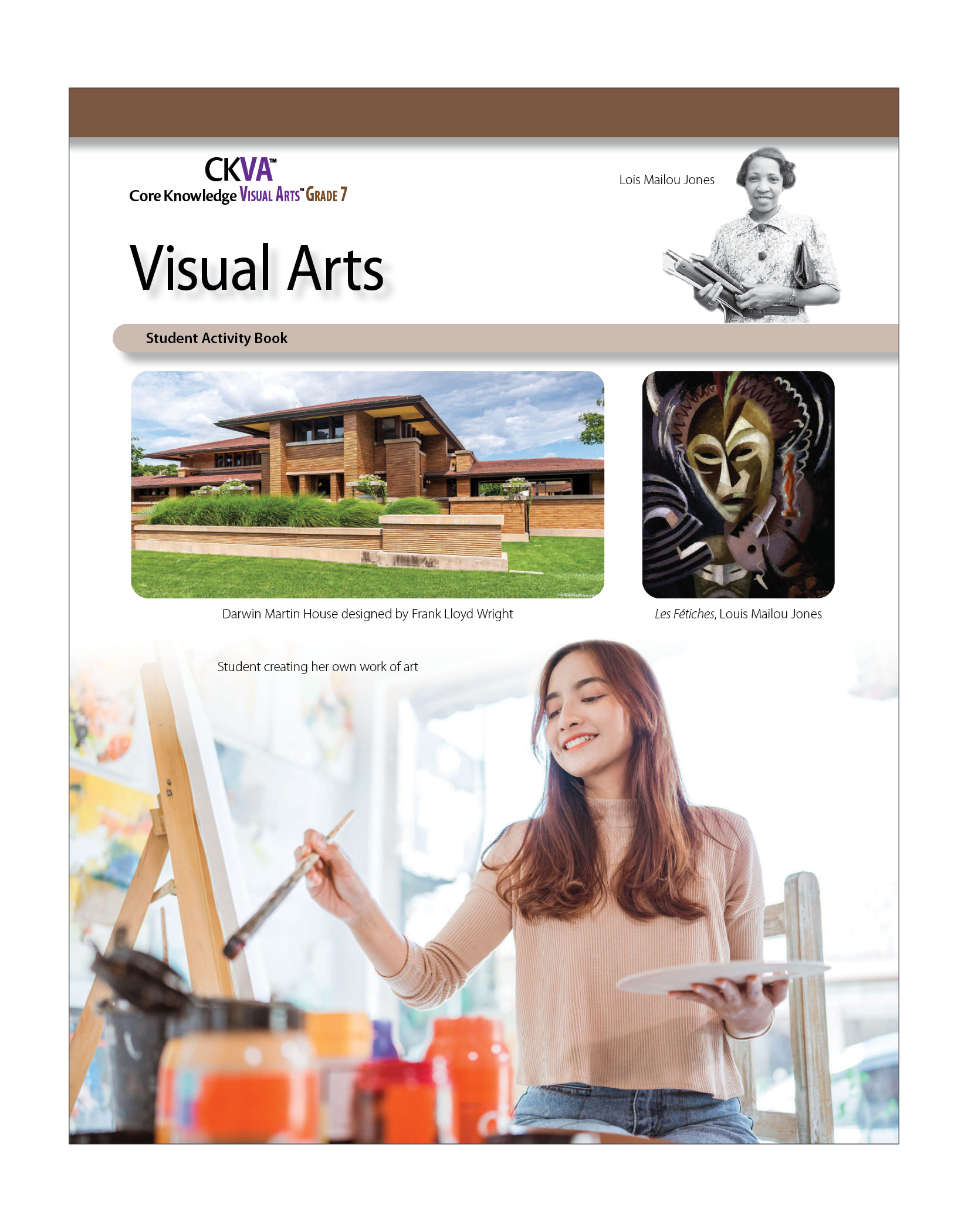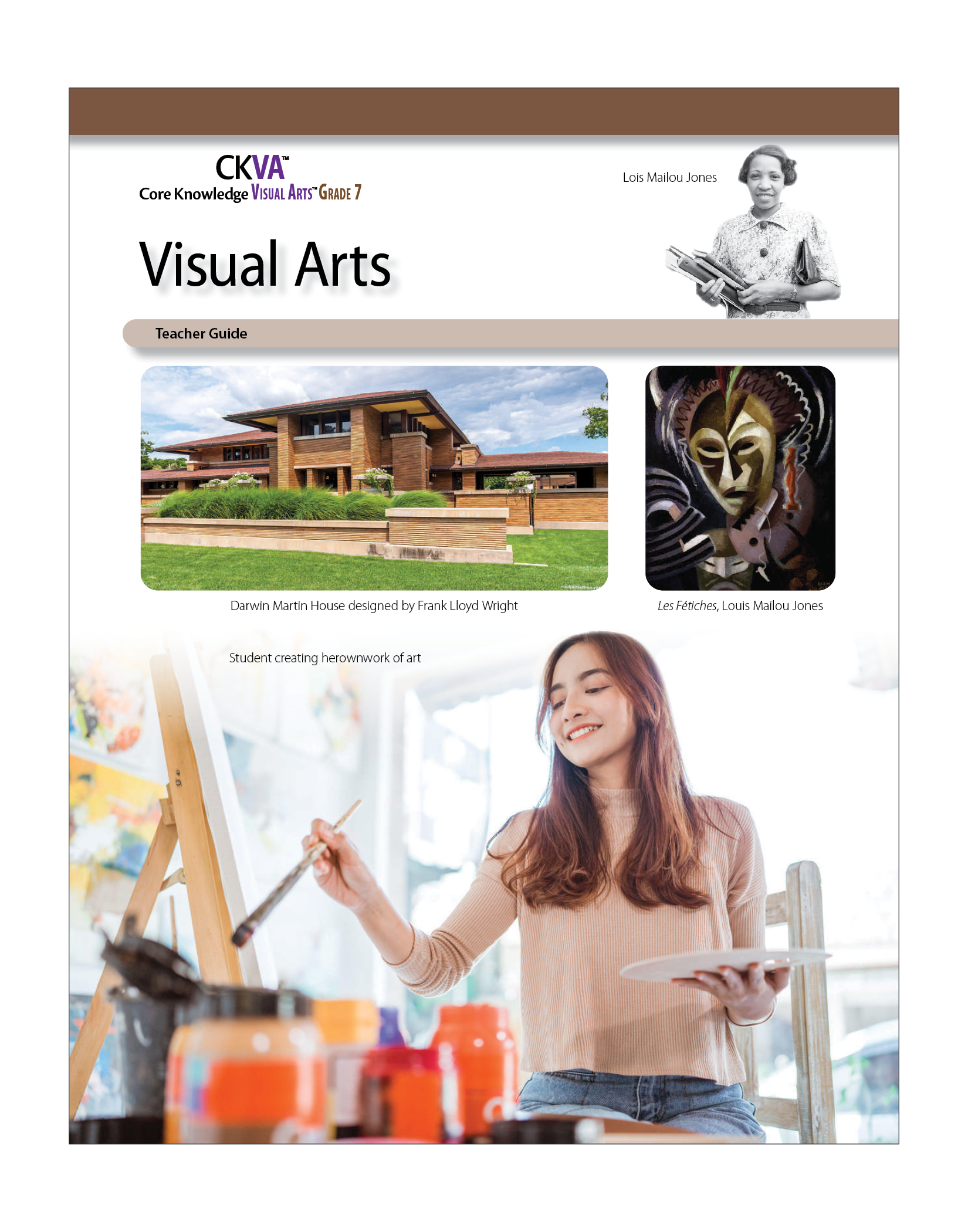
CK Visual Arts: Grade 7
Focus:
Grade 7 CKVA consists of 6 units. The first, Expressionism, guides students through the development of expressionism and its sub movement, fauvism, looking at how artists such as Edvard Munch and Henri Matisse experimented with emotional expression through bold and unusual colors and technique.
In the Cubism unit, students will analyze how Georges Braque and Pablo Picasso, the pioneers of this movement, moved away from realistic representation toward the deconstruction of subjects into several different perspectives, and then reassembled them to depict them from several viewpoints at once.
Surrealism explores a movement inspired by the works of André Breton and Sigmund Freud, where artists like Salvador Dali and René Magritte explored the unconscious mind using dreamlike imagery and bizarre juxtapositions to depict the irrational inner workings of the human psyche.
The fourth unit, Abstract Expressionism, looks at the works of Jackson Pollock, among others, and how he completely broke from realistic representation to create completely abstract works focusing on the creation process rather than the artwork itself. Abstract expressionists used unconventional materials like household paint, sticks, turkey basters, and other common everyday objects in a response to the meaninglessness and irrationality of war in post-WWII America as they searched for meaning in the act of creation.
The unit Abstraction analyzes how major figures of the movement, like Piet Mondrian and Vasily Kandinsky, sought to create nonrepresentational depictions by moving away from all traditional means of artistic expression. They aimed to express ideas and concepts instead of emotions, applying these principles to portraiture and nature art as they tried to capture the essence of their subject through geometric and organic forms. Like the abstract expressionists, they responded to the meaninglessness of war in post-WWII America through the act of creation.
The final unit, Twentieth-Century Architecture, explores developing twentieth-century architecture. Students will especially focus on organic architecture, where a structure’s design is meant to blend in with the natural environment rather than impose upon it, a style pioneered by Louis Sullivan, Frank Lloyd Wright, and others. Some architectural designs were a response to environmental issues like climate change, oil spills and the scarcity of natural resources resulting from the industrial era.
Number of Lessons: 26
Instruction Time: 45 minutes each. Each lesson may be divided into smaller segments.
Additional Search Terms:
avant-garde • distorted • perspective • two-dimensional • collage • frottage • drip painting • impasto • performance art • cantilever construction
PRE-ORDER AVAILABLE: Receive free shipping on the Classroom set when you purchase before 5/8/26.