

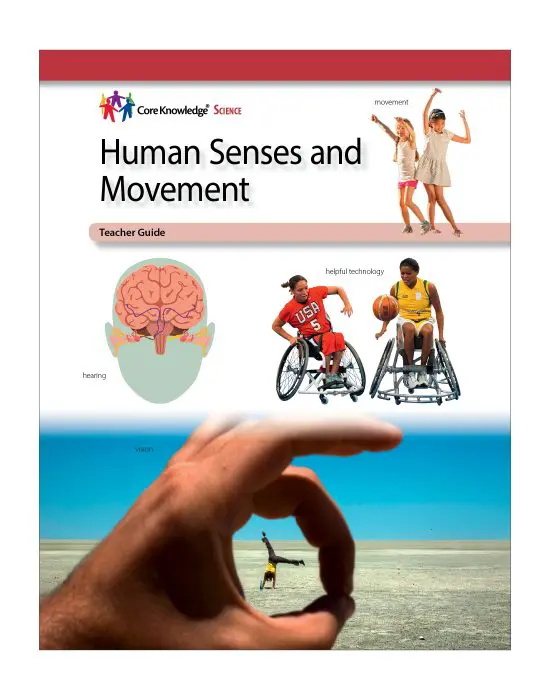
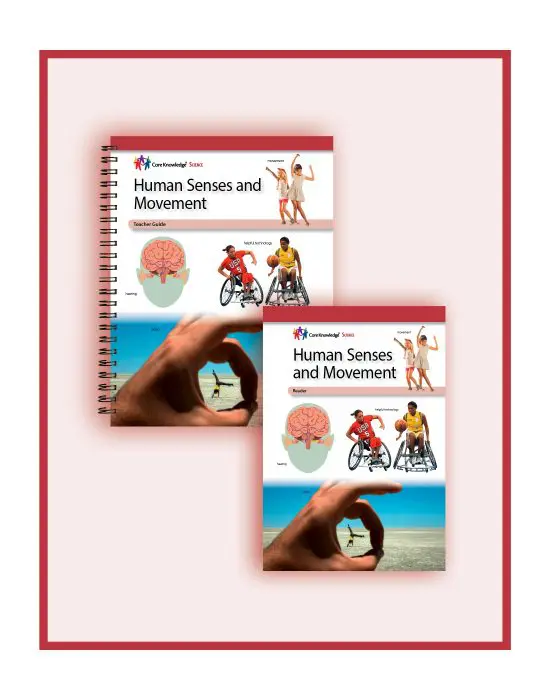
Human Senses and Movement: CKSci Student Reader
$8.95
Paperback
6.7 in. W x 9.6 in. H
48 pages
ISBN: 978-1-68380-622-6
SKU: CKSCIHSMSR
Students are familiar both with their body’s ability to sense information from the environment and with their ability to move. What they may not have studied yet is the relationship between senses and movement—the notion that most of the time when they move a body part, that movement is initiated or guided by their senses. Their bodies are coordinating complex operations among multiple body systems with every movement.
Voluntary action of the human body is guided by sensory input, particularly by vision and hearing. The nervous system is at the center of sensorimotor function, providing the bridge between information the body receives and action the body carries out in response. Motor functions orchestrated by the nervous system are executed through movement enabled by the interaction of the muscular and skeletal systems.
Students read about vision, hearing, and the nervous, skeletal, and muscular systems. Specifically, students read about these body structures and functions as they relate to the task of returning a serve of a table tennis ball. Reading about these body structures and functions in this context is reinforced by teacher demonstrations. Students further explore the different aspects of the body’s performance of the task through observations of their own body movements and through investigations in which they manipulate objects and materials.
You may also be interested in…

If you are interested in information about our professional learning offerings, please visit our Professional Learning page.
If you need further information, please contact us at professionaldevelopment@coreknowledge.org.
Please review our Return and Discrepancy Policy.
Frequent customer? Consider creating an account to speed up your checkout process. Please call us at (800) 238-3233 or use our customer support form for help to complete your order.