5 min read · Jun 30, 2026
How one Core Knowledge family keeps the learning going during the summer months
School’s out! The backpacks are in the closet. And in a sunny Virginia home, Amy Hibshman‘s kids are still reading, because they want to.
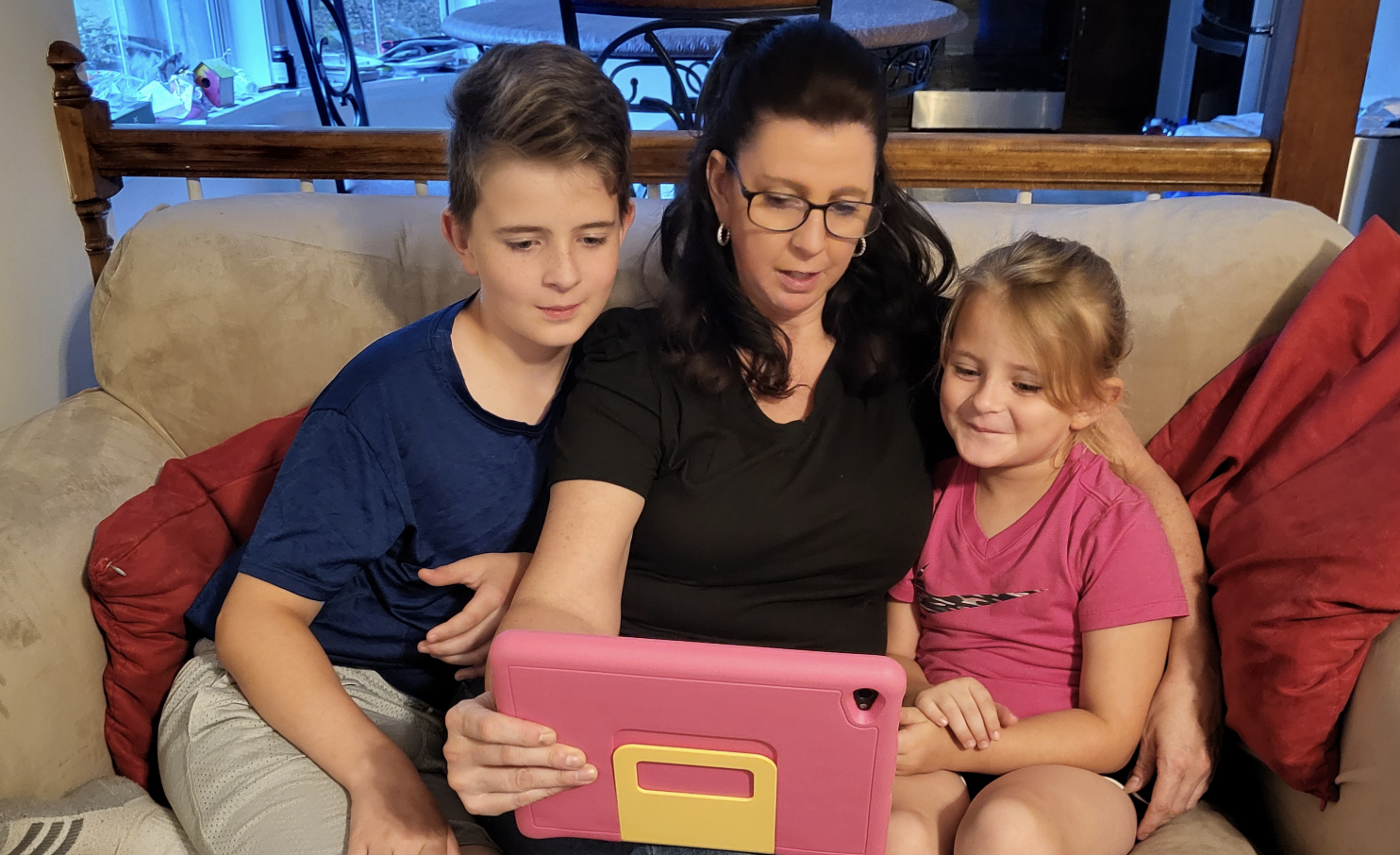
Amy is part of the Core Knowledge Foundation team. This summer, she’s been reading with her kids, Coleson (11) and Kayla (7) most days, no schedule required.
Her children have been spending time each day with titles from the Core Knowledge Free Library, sometimes together, sometimes snuggled up with Mom.
“One of my favorite moments this summer,” Amy explains, “has been hearing both Coleson and Kayla say things like, ‘I learned about this in school!’ while reading their books. Those connections between what they were reading and what they had already learned helped reinforce the content and made it feel more connected.”
“The digital books are wonderful for traveling as a family,” she continues, “If you have a Wi-Fi hotspot, you can take your entire library with you instead of packing a stack of books.”
One memorable connection came after the family visited an old mining town in Georgia during their vacation. Inspired by the trip, they began reading Adventures in History: The Gold Rush together.
“It was a great way to connect our travels with what they were learning,” Amy reflects.
What Is the Core Knowledge Free Library?
The Core Knowledge Free Library is a growing collection of free digital books for children in preschool through grade 8.
Titles span history, biography, world cultures, and literature, all connected to the Core Knowledge Sequence, the research-backed, grade-by-grade curriculum framework developed by E.D. Hirsch, Jr.
There are three main series:
- CK Voices in History™ – narrative biographies of remarkable figures like Harriet Tubman, Marie Curie, Benjamin Franklin, and Jackie Robinson
- CK Adventures in History™ – historical fiction following young protagonists through real events like the Gold Rush, the Trail of Tears, and World War II
- CK Collection of Tales™ – folktales and stories from Latin America and the Caribbean, with more collections on the way
Titles are available at no cost, readable on any device. No subscriptions, no late fees.
For homeschooling families, the Free Library is especially useful because the titles align naturally with the Core Knowledge Sequence across grades K–8.
They work beautifully alongside Core Knowledge Language Arts (CKLA) and Core Knowledge History & Geography (CKHG), or on their own, enriching independent reading.
Reading Together, and Reading Alone
One of the things that makes Amy’s summer reading setup so replicable is how flexible it is.
Some evenings, she sits with Coleson and Kayla on the couch and reads together, a moment that’s as much about connection as it is about comprehension.
Other times, Kayla disappears into her reading nook, a little fort with fairy lights and a rainbow blanket. She has been learning about Helen Keller, and the glow of the screen on her face says everything: she is in it.
Coleson, a little older, has been working through Voices in History biographies on the laptop, including Thomas Edison and Benjamin Banneker, sometimes at his desk in the evening, sometimes at the kitchen table with the summer trees visible through the window behind him.
Why Read Alouds Still Matter (Even in Summer)
For younger readers, the research behind the Core Knowledge approach is clear: read alouds are one of the most effective literacy tools available today.
Thomas Sticht’s landmark analysis of listening and reading comprehension found that children’s ability to understand what they hear outpaces their ability to understand what they read independently, all the way through the middle school years.
That’s worth remembering even as kids get older: Coleson is past the age where read alouds might seem necessary, but the same research suggests his listening comprehension still outpaces his independent reading, which is part of why family read-aloud time stays worthwhile well beyond the picture-book years.
That means when Amy reads to Kayla, she isn’t just spending time with her daughter. She’s exposing her to richer vocabulary, more complex sentences, and deeper content knowledge than Kayla could yet access alone on the page.
According to the Core Knowledge Sequence, this kind of rich read aloud experience, followed by real conversation about the story, is foundational to building the listening comprehension and background knowledge that children need to become strong independent readers later.
The Knowledge That Opens Doors
E.D. Hirsch, Jr. spent decades making the case that reading comprehension isn’t just a skill; it depends on what you know.
A child who has heard stories about the Civil War, ancient civilizations, or famous scientists doesn’t just have interesting facts in their head. They have the background knowledge that makes future reading, and future learning, click into place in a way it simply can’t without that foundation.
Summer is a natural opportunity to build that knowledge base. Not through worksheets or test prep, but through good stories.
The Free Library titles are designed to do exactly that, to connect children to the big ideas, events, and people that the Core Knowledge Sequence identifies as essential building blocks for educated, engaged citizens.
Try It This Summer!
You don’t need a plan or a schedule, just fifteen minutes and a device.
The Core Knowledge Free Library is free, always open, and full of stories worth reading, whether your child curls up with a tablet in a reading fort or settles in at the kitchen table with an older sibling.