4 min read · Jun 25, 2026
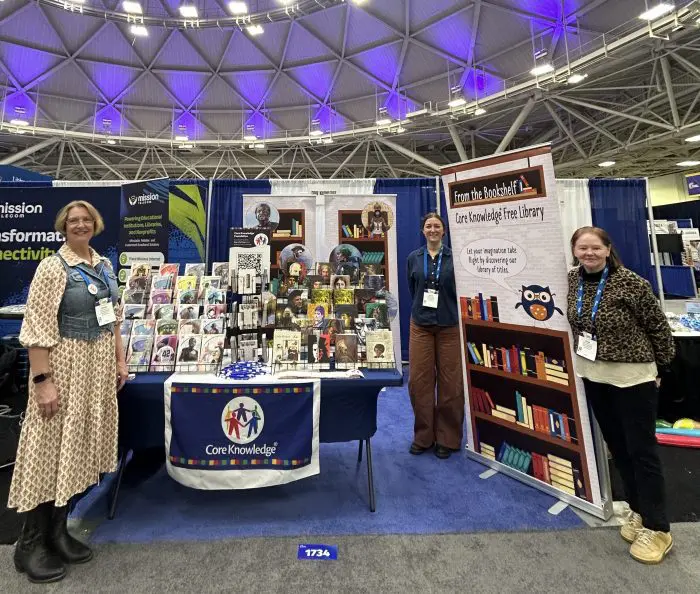
At the Public Library Association Conference in Minneapolis this spring, Core Knowledge Foundation’s Free Library team of Rosie McCormick and Sophie Nunnally heard the same question repeatedly.
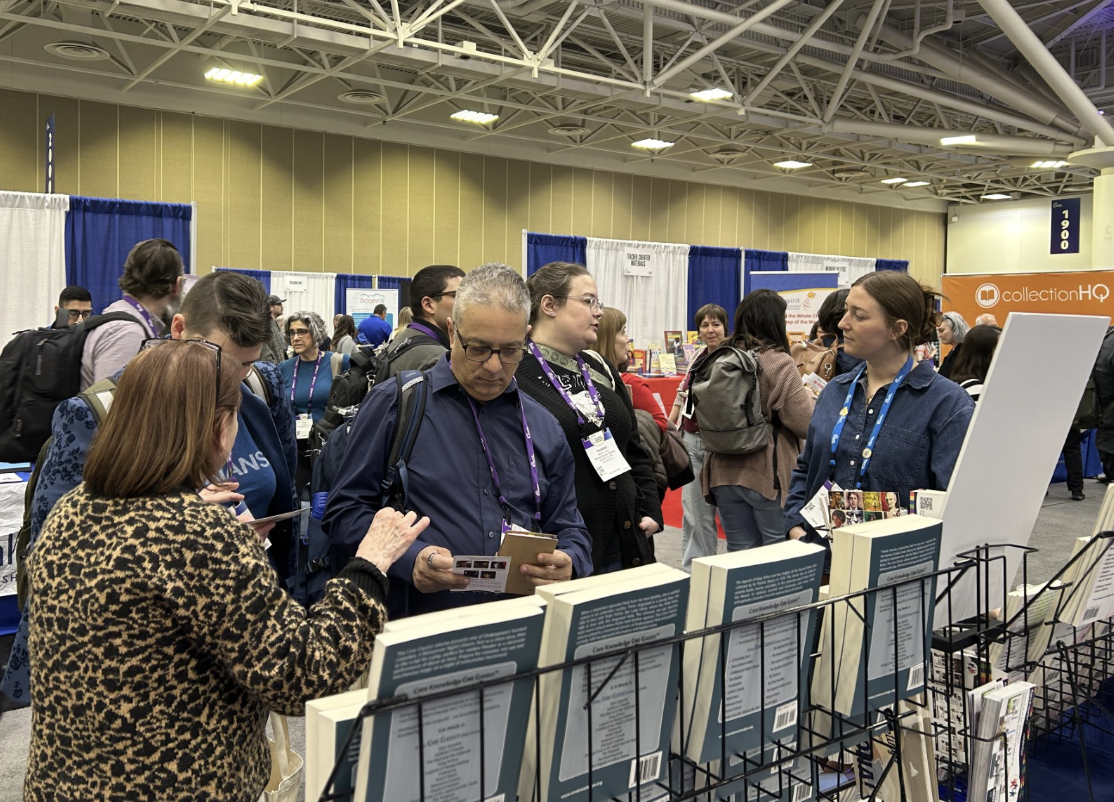
A librarian would stop at the Core Knowledge booth, start leafing through one of the books on display. The illustrations drew them in, but they quickly became immersed in the subjects and the writing.
Eventually, they would ask:
“Where can I access these books?”
And when they heard that everything was freely available online, no subscription, no login, no limited access, there was often a brief pause of genuine surprise, because resources like this rarely operate that way anymore.
What the Free Library actually is
The Core Knowledge Free Library is a curated digital collection of complete books for young readers: historical narratives from the War of 1812 to the Tang Dynasty, biographies of figures from Vincent van Gogh to Cleopatra, and stories connected to science, geography, and the wider world.
The collection currently includes forty titles written and illustrated by respected children’s authors and illustrators, among them Nancy Churnin, Kathryn Erskine, Glenda Armand, Anne Marie Pace, Christopher Thornock, and Adam Gustavson. All titles are complete, carefully commissioned works — not abridged excerpts or leveled fragments – explicitly designed to help children strengthen both reading habits and knowledge of the world around them.
Later this summer, several titles will be available as audiobooks, alongside a redesigned, more user-friendly website, expanding access in ways that matter especially for families without books readily at home. Most titles are also available in affordable print editions for libraries, classrooms, and families who want physical books.
What PLA revealed
The Public Library Association Conference drew over 6,000 attendees and focused heavily on questions of access, equity, outreach, and the evolving role of libraries in public life.
Rosie and Sophie attended alongside educator and CK Implementation Support Manager Nonnie Cullipher, displaying the Free Library interactive website alongside physical copies of several titles and selections from Core Knowledge’s Core Classics collection.

Some school librarians recognized the curricular connections quickly as many of the books align directly with historical periods and topics students encounter in class, especially for those using Core Knowledge History and Geography (CKHG) or Core Knowledge Language Arts (CKLA).
But public librarians saw something broader.
Repeatedly, conversations turned toward:
- homeschool communities
- summer reading initiatives
- English language learners
- rural outreach
- underserved urban communities
- family literacy programs
- adult learners rebuilding reading confidence
Several librarians described digital licensing costs as one of the defining pressures facing public libraries today, particularly for ebooks and audio resources.
More than one person said a high-quality digital library that placed no restrictions on access was something distinctive and invaluable that they’d genuinely been looking for, or wished they had been.
Reading with something to recognize
The idea that comprehension depends not only on reading skill, but on sustained exposure to language and knowledge over time, has long been central to the thinking behind Core Knowledge.
Core Knowledge Founder Dr. E. D. Hirsch Jr. has written often about what’s at stake when children aren’t given sustained exposure to language and ideas:
“If we do not spend large amounts of time reading aloud and discussing challenging material with children, material that is well beyond their ability to decode with understanding, we miss a critical opportunity to increase their knowledge of language and of the world, the kind of knowledge that will prove decisive for reading in later years.”
The forthcoming audiobooks reflect that principle directly, built for exactly the kind of read-along and read-aloud use Hirsch describes. But librarians, teachers, family members, and friends can play that role, too.
Teachers see the effect in practice. When students encounter a topic they’ve come across before – a historical figure, an event, a place – comprehension improves, but so does something harder to measure: confidence. A child who already knows something about Vincent van Gogh reads about him, and art history, differently than a child who doesn’t.
Quiet growth worth noting
In early 2025, the Free Library had several hundred users. In the same period this year, that number exceeded 7,000, an increase of nearly 1,000 percent.
And yet, throughout the PLA conference, librarians encountering the collection for the first time kept asking the same question:
“How have I not heard about this before?”
A new partnership and a resource for all
One concrete outcome from Minneapolis: after a conversation at the Association for Rural & Small Libraries (ARSL) booth, the Core Knowledge Foundation has become an ARSL member. The two organizations will begin exploring collaborative work, particularly in underserved communities where free, high-quality educational resources are most needed.
That conversation reflected something that animated so many of the conversations at PLA. Attendees moved quickly from discovery to excitement to practical application. Summer reading programs. Home-school read-aloud routines. Classroom extensions and independent learning. Family access for students without books at home.
For schools already using CKLA or CKHG, the collection is a natural complement, with science titles to supplement CKSci coming next year. But it also stands on its own for anyone who believes children benefit from reading substantial, engaging books connected to history, science, culture, and the wider world – freely available, and affordable in print.