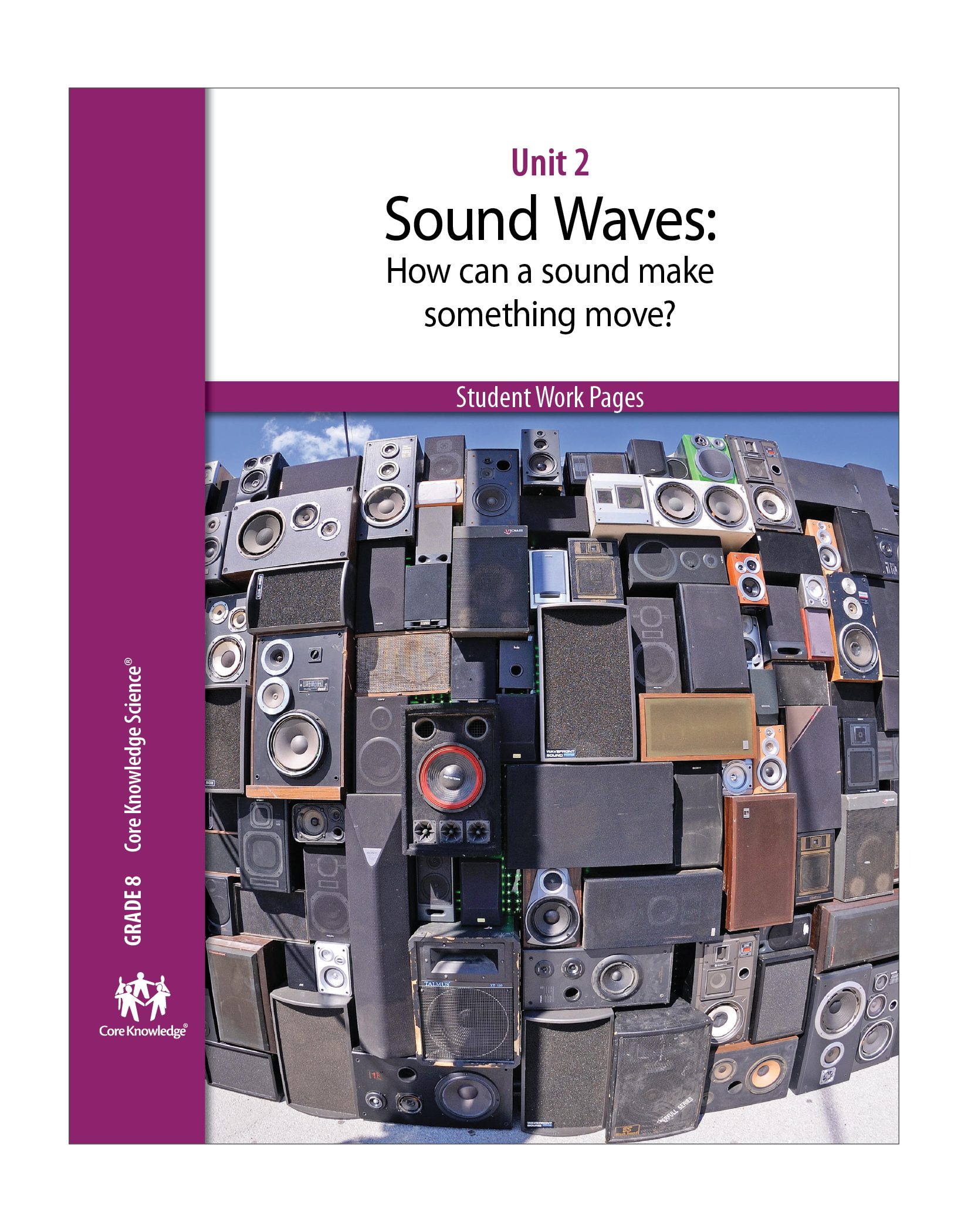
CKSci Unit 2: Sound Waves
Focus:
In this unit, students investigate the phenomena of sound and sound waves. The subtitle of this unit is How can a sound make something move? The experience of seeing a vibrating object cause another object to move is a phenomenon that students experience when they see the sound from a loud truck cause windows in a nearby building to move. What causes this to happen? Does sound need air to travel though? What causes some sounds to have a high or low pitch? What causes some sounds to be louder than others? This unit allows students to observe these phenomena in detail and then start asking questions, formulating explanations, setting up and conducting activities and research, then work with classmates to analyze their shared experience, formulating new questions and developing new strategies for answering them. Students explore concepts that include the following:
- How does a sound source cause another object to move?
- What is happening when speakers and other music makers make sounds?
- How can any object make so many different sounds?
- What exactly is traveling across a medium?
- What transfers more energy, waves of bigger amplitude or waves of greater frequency?
As students move through their day-to-day activities, they will also read Core Knowledge literacy selections. These include factual articles, history of the sciences, art and literature, spotting bad science in media and advertisements, graphics comprehension, research-type articles, reliability of sources, and other areas of science literacy.
Number of Lessons:
- Teacher Guide: 14 Lessons
- Student Reader: 5 Collections
Instruction Time (Student Reader):
- Lessons are designed to be completed in one or more class periods.
- A Pacing Guide found in Online Resources offers a suggested time to complete the entire unit if class is held each day.
- The entire unit should take about 24 days to complete if class is held each day.
- A complete list of Materials needed to complete the unit is provided in Online Resources.
Additional Search Terms:
sound • sound wave • science literacy • medium • wind turbine • amplify • wave frequency • pitch • decibel • amplitude • loudness • hertz • ultrasonic • acoustic • soundscape • longitudinal wave • nonfiction • informational text