CKHG Unit 11: Civil Rights Leaders
Focus:
This unit celebrates the lives of people who faced injustice with bravery, whose work helped create a greater awareness of the needs and abilities of those who were often ignored, neglected, and abused. In doing so, they championed the words proclaimed in the Declaration of Independence, that all people are created equal, and worked to see the reality of “liberty and justice for all.”
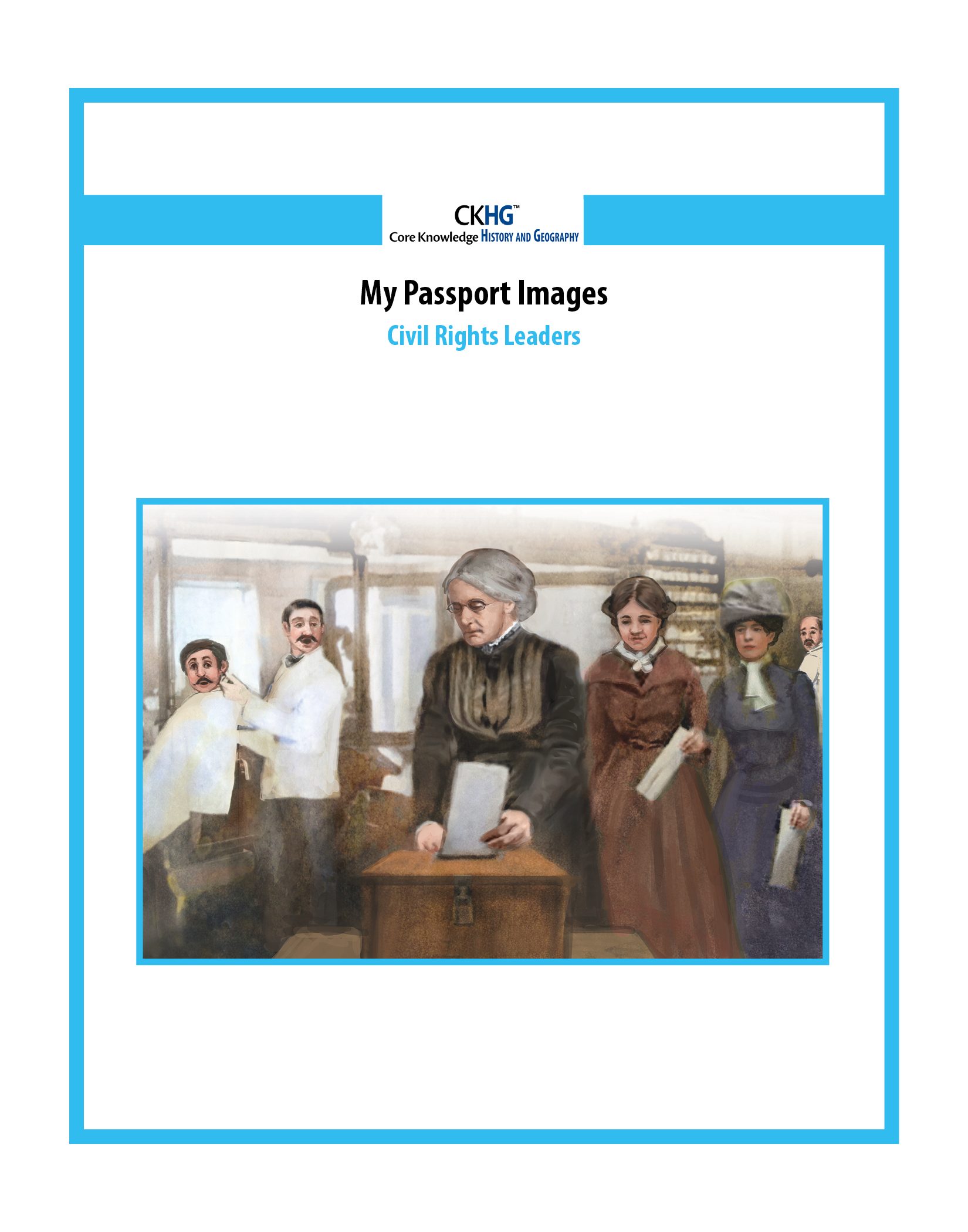
Civil Rights Leaders begins with Susan B. Anthony. An abolitionist before the Civil War, she turned her focus to women’s suffrage and was instrumental in getting women the right to vote. Students then learn about Mary McLeod Bethune, an African American woman who devoted her life to the education of African Americans during the time of segregation. Next, the unit turns to Eleanor Roosevelt, who despite being born into privilege, was a champion for human rights and our nation’s first representative to the United Nations.
Students discover Jackie Robinson and his courageous work to break the color barrier in Major League Baseball. They then meet Rosa Parks and learn about the Montgomery, Alabama, bus boycott she inspired when she refused to give up her seat to a white man on a city bus. That bus boycott was led by Martin Luther King, Jr., also profiled in the unit. Students learn about King’s life from his childhood in the segregated South to his “I Have a Dream” speech, delivered in 1963 at the Lincoln Memorial in Washington, D.C.
Cesar Chavez is honored for the work he did to make the lives of migrant workers more tolerable. The unit ends by paying homage to the Native American Chief Standing Bear; Dorothy Vaughan, Katherine Johnson, and Mary Jackson, three African American women who made significant contributions to NASA; and Juan Felipe Herrera, who became a famous writer, overcoming the disadvantages he faced during his youth as a migrant worker. All these leaders were ordinary people who worked to make America “a more perfect union.”
Number of Lessons: 8
Instruction Time:
We have intentionally left the pacing and timing needed to teach the content presented in the Teacher Guide and Student Book very flexible. Teachers can choose how much they read aloud and discuss in a single instructional period, as well as how often each week they use the CKHG materials.
Additional Search Terms:
informational text • nonfiction • slavery • segregation • Franklin Delano Roosevelt • The Great Depression • Native Americans • United Nations • discrimination • Branch Rickey • Mohandas Gandhi • civil rights movement • boycott • hunger strike • Ponca Nation