Default image for pages

Our interviewer, Beth Battle Anderson, is President and CEO of the Core Knowledge Foundation. Cleopatra was the last active ruler of ancient Egypt and one of history’s most famous queens. You can meet her in the Free Library or CKHG Unit 2 in Ancient Rome, free to download here. 

Beth: Every fall, Core Knowledge teachers everywhere brace for the same happy problem: how do you make Ancient Egypt or Ancient Rome feel alive to a room of ten-year-olds on day three of the new school year? This month, I got a head start by sitting  down with one of the most beguiling characters herself, Cleopatra VII, last pharaoh of Egypt, fluent in nine languages, and (still, apparently) allergic to being kept waiting. 

Beth (turning to Cleopatra): Your Majesty, thank you for making time. 

Cleopatra: Two thousand years is a long wait for a good conversation. So, what do people want to know? 

Beth: Let’s start where the textbooks usually don’t. You weren’t just beautiful or bold; you were formidably educated. 

Cleopatra: (laughing) Ah, beauty. It’s always the opener. People have always found it easier to talk about my looks than my education. I read Homer in Greek. I was the first ruler in my family to learn Eqyptian in three hundred years. I could talk with visitors from Ethiopia, scholars from Judea, generals from Parthia, all in their own language. That wasn’t just to be seen as welcoming and warm; it was disarming, and it’s how I survived. 

Beth: You became queen at eighteen. That’s younger than most of our high schoolers heading off to college! 

Cleopatra: (a slow smile) And I came from a family where power changed hands constantly, and rarely gently. My own father lost his throne once and had to buy it back. I did not have the luxury of learning as I went. Everything I knew, I had to know before I needed it, whether it was the history of every kingdom near mine or the temperament of every Roman general who might one day bring an army to our shores. Knowledge gave me confidence and power. It was both my armor and my sword. 

Beth: That’s exactly where I want to go. There are folks in education today who think we should just focus on teaching children generic “skills” like critical thinking, trusting that the knowledge part comes along sometime later, or may not even be as necessary because we have all this technology that puts “knowledge” at our fingertips so we can just look it up.

Cleopatra: (eyebrows raised, amused) Really? People really believe and argue about this? 

Beth: Constantly, I’m afraid. 

Cleopatra: People mistake knowledge for information. It is not. Knowledge is the thread that ties a thousand facts together. Knowledge allows you to read a treaty and then understand the implications of a treaty. Knowledge enables you to detect the one word Caesar’s scribe quietly changed, and know his intentions before he speaks them. I didn’t just have a feeling about Rome, I had studied it, for years. You can’t navigate your way through an empire you’ve never bothered to understand. And I don’t think you can ask a child to have a confident understanding of a whole world nobody has shown them. 

Beth: This is the idea at the heart of our curriculum at Core Knowledge: if children know more about the world, they can understand what they read, make connections across ideas, and learn new things more easily. They’re prepared to navigate their world. That’s the whole premise of a knowledge-building education, and it’s why it’s free through our Sequence and our Free Library. No child should be locked out of the kind of knowledge that let you outmaneuver two Roman generals! 

Cleopatra: An unusual philosophy. In my world, knowledge was guarded because it was power. 

Beth: And in my world, we know what it costs when children don’t have access to it. Some begin school having heard thousands of words and stories at home. Others arrive with far fewer opportunities to build that background knowledge. A knowledge-building curriculum tries to give every child the same rich foundation to build on, regardless of where they started. 

Cleopatra: (quiet for a moment) Then you are doing something I could not. I could gather knowledge for myself, but I could not place it within the reach of an entire kingdom of children I would never meet. 

Beth: That’s the goal. So, deal? Knowledge first, skills follow? 

Cleopatra: We agree. Give the children the whole map before you send them out to find their own way. That is all I ever asked of my own teachers. 

Beth: I’ll have that embroidered on something. 

Cleopatra: (smiling) Good. And tell your teachers, when they tell my story, please don’t introduce me as a beauty or a scandal! Introduce me as proof of what a well-stocked mind can do. I ruled a kingdom for two decades in a world built to see me fail. Not because of how I looked. Because of what I knew.  

Beth: Consider it done! 

Cleopatra: (rising, already halfway out the door) And do bring me back for the fall of Rome. I have opinions about that, too. 

Editor’s note: Speaking of characters with opinions  if your students have been asking about a certain shipwrecked Greek making headlines this summer, Cleopatra’s not the only one waiting for them in the Core Knowledge collection. Odysseus took the long way home about a thousand years before she took the throne; our Core Classics edition gets him there faster.
2 min read · Aug 12, 2026

Big news for Kentucky classrooms! The Core Knowledge Foundation is partnering with the state to build a new K-8 social studies curriculum, developed specifically for Kentucky.

The Kentucky Department of Education announced during the Superintendents Webcast that a new curriculum, “Our Commonwealth, Our Nation, Our World,” is to be built around the state’s own academic standards, community, and history. 

“Districts across the Commonwealth have consistently requested high-quality, standards-aligned social studies materials, and current market options often require significant local adaptation,” said Micki Ray Marinelli, KDE’s chief academic officer.  The new curriculum integrates Core Knowledge’s coherent, cumulative approach to knowledge-building together with inquiry, all grounded in Kentucky’s own standards and content.  

The name captures the scope of the curriculum, weaving together Kentucky’s people. places, stories, and history (Our Commonwealth) with U.S. history and civics (Our Nation) and world history and geography (Our World), building knowledge at every grade level.  

Here’s what that means in practice: 

For classroom teachers: “Our Commonwealth, Our Nation, Our World” will be entirely free to download, with low-cost print student readers, teacher guides, and student notebooks also available, along with comprehensive professional learning to support teachers as it rolls out.   

For school and district leaders: This is a statewide undertaking at real scale – a full K-8 curriculum, free and open for any district that wants it. It’s a resource districts can opt into because it’s genuinely made for them. KDE, CKF, and our professional learning partners will provide guidance over the coming year around how best to plan for adoption and successful implementation.  

For homeschooling families: Because the materials will be free and openly available, they’re worth watching too, whether as a core resource or a supplement to what you’re already using. 

As Beth Battle Anderson, Core Knowledge’s CEO, puts it, this work applies decades of curriculum design expertise directly to Kentucky’s own academic standards.

Materials will arrive in phases, beginning with kindergarten and grades 3, 5, and 8 in time for the 2027-28 school year. Remaining grades will be released the following year. 

For a state to choose to build something this ambitious, this collaboratively, and this openly is rare. The Core Knowledge Foundation is proud to help make it real for the students, educators, and families of Kentucky.

Image courtesy of Shutterstock

Our interviewee, Nonnie Cullipher, serves as Implementation Support Manager at the Core Knowledge Foundation. Sherlock Holmes is a legendary fictional detective created by Scottish author Sir Arthur Conan Doyle. You can meet him in the Grade 5 Core Classics® Series, free to download here. 

Sherlock Holmes: Good day, all. Sherlock Holmes, at your service! In my constant pursuit of facts, evidence, and the occasional elusive truth, I have invited one of the Core Knowledge Foundation team members, Nonnie Cullipher, to assist me in examining a curious modern classroom mystery. And so, as I am fond of saying, “The game is afoot.” * 

Nonnie Cullipher: Hello, Mr. Holmes. I’m pleased to be here, and I hope I can provide a little insight. 

Sherlock Holmes: “To a great mindnothing is little.” ** Now then, I have heard the phrase “bringing books back to the classroom,” and it presents a most peculiar puzzle. Did the books vanish? Were they misplaced? 

Nonnie Cullipher: Well… not exactly.  

Sherlock Holmes: If so, I assure you I have some experience in recovering what others have overlooked!  

Nonnie Cullipher: I’m glad to say books never disappeared. I think what you are referring to is a growing conversation in schools about the role of technology in classrooms. 

Sherlock Holmes: “It is a capital mistake to theorize before you have all the evidence.” *** And yet, in this instance, Miss Cullipher, your deduction is sound! Tell me, then: do schools now regret the use of these “screens,” as you Americans call them, within the classroom? 

Nonnie Cullipher: I’d say it’s more layered than that. Like most classroom decisions, it depends on the students, the lesson, and the purpose. I’m one educator, and there are experts studying this from many perspectives… 

Sherlock Holmes: Precisely! Evidence first, conclusion second. Observe the facts, arrange them properly, and the truth will usually reveal itself! 

Nonnie Cullipher: In general, the conversation seems to be shifting. It is not really about choosing books or screens. It is about using technology wisely, intentionally, and selectively. Computers can give students access to a wide range of resources, support collaboration, and provide accessibility tools. And of course, students need to be prepared to use technology beyond school. 

Sherlock Holmes: Facts! Excellent. Well-ordered facts are as satisfying as a footprint in wet clay. 

Nonnie Cullipher: But Mr. Holmes, didn’t you also say, “There is nothing more deceptive than an obvious fact”? **** The obvious fact is that technology can be useful, but there are also concerns.  

Sherlock Holmes: Go on! 

Nonnie Cullipher: Too much screen time can affect attention, focus, sleep, social development, reading stamina, and mental and physical health. Younger learners already spend a great deal of time on screens outside of school, so many educators are trying to protect and increase time for direct instruction, sustained reading, writing, discussion, and hands-on learning during the school day. 

Sherlock Holmes: Intriguing!

Nonnie Cullipher: Yes, and this issue matters just as much in middle and high school. It’s complicated, and educators and parents need to keep learning from research and classroom experience to make the best decisions for students today.

Sherlock Holmes: Quite right. As with any investigation, the answer is rarely as simple as it first appears. 

Nonnie Cullipher: Precisely, and speaking of investigations, I’m afraid I must be on my way, Mr. Holmes. I just heard that a long-lost collection of stories about Sir Gus, a brave and honorable knight, has been found in the ruins of an old castle. There’s still so much we don’t know about him, and I, like you, can’t resist a good mystery! 

Sherlock Holmes: The case is not closed; we must follow the evidence wherever it leads and attend closely to what enables students to think deeply, collaborate wisely, create with purpose, and communicate with clarity. Teachers and parents, your classrooms are laboratories of thought. May your observations be sharp, your evidence sound, and your conclusions worthy of the case!

Quotes & References 

* The Return of Sherlock Holmes, 1905 

**A Study in Scarlet, 1887 

***A Scandal in Bohemia, 1891 

**** The Boscombe Valley Mystery, 1891 


This interview is part of our Literary Interview series, in which members of the Core Knowledge community sit down with figures from the Core Knowledge Sequence to explore what they still have to teach us.

5 min read · Jun 30, 2026

 How one Core Knowledge family keeps the learning going during the summer months

School’s out! The backpacks are in the closet. And in a sunny Virginia home, Amy Hibshman‘s kids are still reading, because they want to. 

Amy is part of the Core Knowledge Foundation team. This summer, she’s been reading with her kids, Coleson (11) and Kayla (7) most days, no schedule required. 

Her children have been spending time each day with titles from the Core Knowledge Free Library, sometimes together, sometimes snuggled up with Mom. 

“One of my favorite moments this summer,” Amy explains, “has been hearing both Coleson and Kayla say things like, ‘I learned about this in school!’ while reading their books. Those connections between what they were reading and what they had already learned helped reinforce the content and made it feel more connected.” 

“The digital books are wonderful for traveling as a family,” she continues, “If you have a Wi-Fi hotspot, you can take your entire library with you instead of packing a stack of books.”  

One memorable connection came after the family visited an old mining town in Georgia during their vacation. Inspired by the trip, they began reading Adventures in History: The Gold Rush together. 

“It was a great way to connect our travels with what they were learning,” Amy reflects. 

What Is the Core Knowledge Free Library? 

The Core Knowledge Free Library is a growing collection of free digital books for children in preschool through grade 8. 

Titles span history, biography, world cultures, and literature, all connected to the Core Knowledge Sequence, the research-backed, grade-by-grade curriculum framework developed by E.D. Hirsch, Jr. 

There are three main series: 

  • CK Voices in History™ – narrative biographies of remarkable figures like Harriet Tubman, Marie Curie, Benjamin Franklin, and Jackie Robinson 
  • CK Adventures in History™ – historical fiction following young protagonists through real events like the Gold Rush, the Trail of Tears, and World War II 
  • CK Collection of Tales™ – folktales and stories from Latin America and the Caribbean, with more collections on the way 

Titles are available at no cost, readable on any device. No subscriptions, no late fees. 

For homeschooling families, the Free Library is especially useful because the titles align naturally with the Core Knowledge Sequence across grades K–8. 

They work beautifully alongside Core Knowledge Language Arts (CKLA) and Core Knowledge History & Geography (CKHG), or on their own, enriching independent reading. 

Reading Together, and Reading Alone 

One of the things that makes Amy’s summer reading setup so replicable is how flexible it is. 

Some evenings, she sits with Coleson and Kayla on the couch and reads together, a moment that’s as much about connection as it is about comprehension. 

Other times, Kayla disappears into her reading nook, a little fort with fairy lights and a rainbow blanket. She has been learning about Helen Keller, and the glow of the screen on her face says everything: she is in it. 

Coleson, a little older, has been working through Voices in History biographies on the laptop, including Thomas Edison and Benjamin Banneker, sometimes at his desk in the evening, sometimes at the kitchen table with the summer trees visible through the window behind him. 

Why Read Alouds Still Matter (Even in Summer) 

For younger readers, the research behind the Core Knowledge approach is clear: read alouds are one of the most effective literacy tools available today. 

Thomas Sticht’s landmark analysis of listening and reading comprehension found that children’s ability to understand what they hear outpaces their ability to understand what they read independently, all the way through the middle school years. 

That’s worth remembering even as kids get older: Coleson is past the age where read alouds might seem necessary, but the same research suggests his listening comprehension still outpaces his independent reading, which is part of why family read-aloud time stays worthwhile well beyond the picture-book years. 

That means when Amy reads to Kayla, she isn’t just spending time with her daughter. She’s exposing her to richer vocabulary, more complex sentences, and deeper content knowledge than Kayla could yet access alone on the page. 

According to the Core Knowledge Sequence, this kind of rich read aloud experience, followed by real conversation about the story, is foundational to building the listening comprehension and background knowledge that children need to become strong independent readers later.  

The Knowledge That Opens Doors 

E.D. Hirsch, Jr. spent decades making the case that reading comprehension isn’t just a skill; it depends on what you know. 

A child who has heard stories about the Civil War, ancient civilizations, or famous scientists doesn’t just have interesting facts in their head. They have the background knowledge that makes future reading, and future learning, click into place in a way it simply can’t without that foundation. 

Summer is a natural opportunity to build that knowledge base. Not through worksheets or test prep, but through good stories. 

The Free Library titles are designed to do exactly that, to connect children to the big ideas, events, and people that the Core Knowledge Sequence identifies as essential building blocks for educated, engaged citizens. 

Try It This Summer! 

You don’t need a plan or a schedule, just fifteen minutes and a device. 

The Core Knowledge Free Library is free, always open, and full of stories worth reading, whether your child curls up with a tablet in a reading fort or settles in at the kitchen table with an older sibling. 

4 min read · Jun 25, 2026

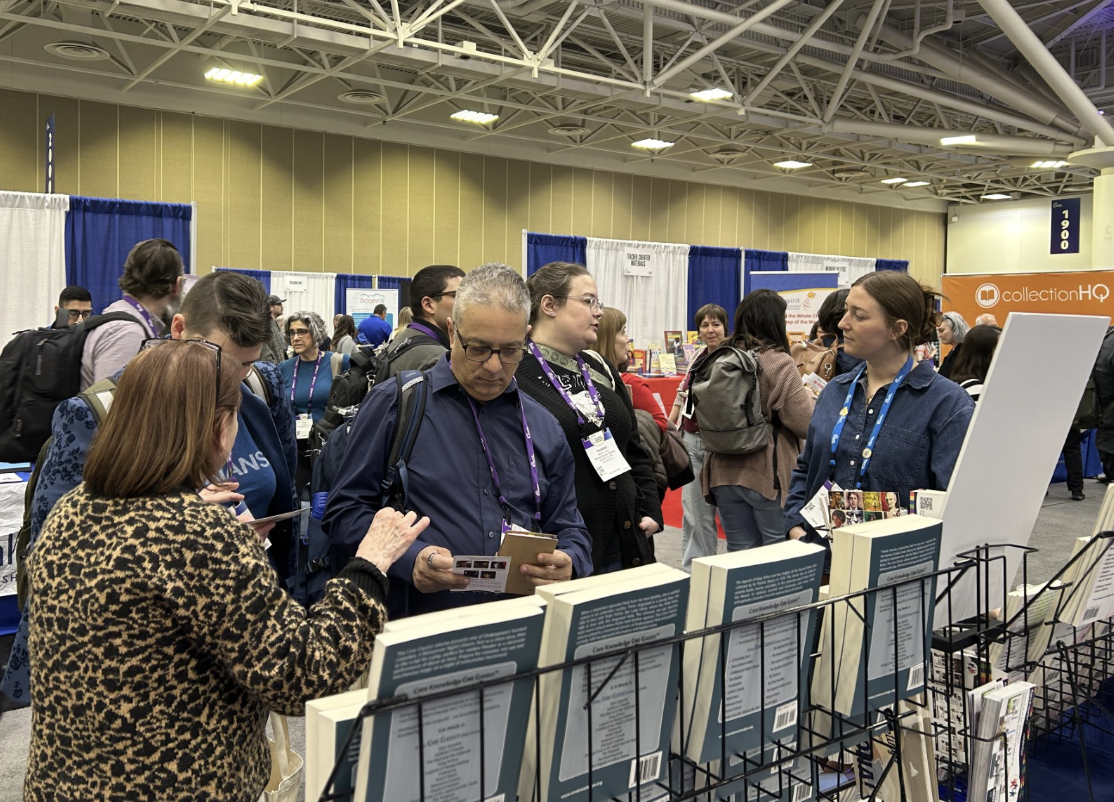
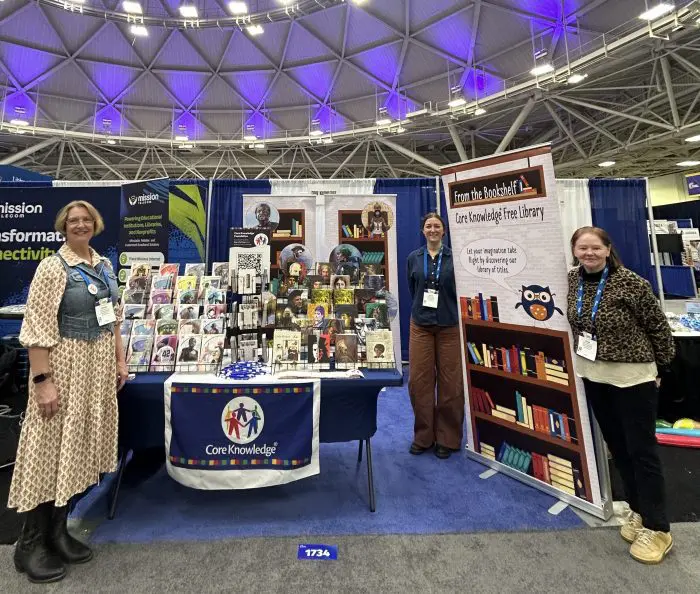
At the Public Library Association Conference in Minneapolis this spring, Core Knowledge Foundation’s Free Library team of Rosie McCormick and Sophie Nunnally heard the same question repeatedly.  

A librarian would stop at the Core Knowledge booth, start leafing through one of the books on display. The illustrations drew them in, but they quickly became immersed in the subjects and the writing.  

Eventually, they would ask: 

“Where can I access these books?” 

And when they heard that everything was freely available online, no subscription, no login, no limited access, there was often a brief pause of genuine surprise, because resources like this rarely operate that way anymore. 

What the Free Library actually is 

The Core Knowledge Free Library is a curated digital collection of complete books for young readers: historical narratives from the War of 1812 to the Tang Dynasty, biographies of figures from Vincent van Gogh to Cleopatra, and stories connected to science, geography, and the wider world.  

The collection currently includes forty titles written and illustrated by respected children’s authors and illustrators, among them Nancy ChurninKathryn ErskineGlenda ArmandAnne Marie PaceChristopher Thornock, and Adam Gustavson. All titles are complete, carefully commissioned works — not abridged excerpts or leveled fragments – explicitly designed to help children strengthen both reading habits and knowledge of the world around them.  

Later this summer, several titles will be available as audiobooks, alongside a redesigned, more user-friendly website, expanding access in ways that matter especially for families without books readily at home. Most titles are also available in affordable print editions for libraries, classrooms, and families who want physical books. 

What PLA revealed 

The Public Library Association Conference drew over 6,000 attendees and focused heavily on questions of access, equity, outreach, and the evolving role of libraries in public life. 

Rosie and Sophie attended alongside educator and CK Implementation Support Manager Nonnie Cullipher, displaying the Free Library interactive website alongside physical copies of several titles and selections from Core Knowledge’s Core Classics collection. 


Some school librarians recognized the curricular connections quickly as many of the books align directly with historical periods and topics students encounter in class, especially for those using Core Knowledge History and Geography (CKHG) or Core Knowledge Language Arts (CKLA) 

But public librarians saw something broader.   

Repeatedly, conversations turned toward: 

  • homeschool communities
  • summer reading initiatives 
  • English language learners 
  • rural outreach 
  • underserved urban communities 
  • family literacy programs 
  • adult learners rebuilding reading confidence  

Several librarians described digital licensing costs as one of the defining pressures facing public libraries today, particularly for ebooks and audio resources. 

More than one person said a high-quality digital library that placed no restrictions on access was something distinctive and invaluable that they’d genuinely been looking for, or wished they had been. 

Reading with something to recognize 

The idea that comprehension depends not only on reading skill, but on sustained exposure to language and knowledge over time, has long been central to the thinking behind Core Knowledge. 

Core Knowledge Founder Dr. E. D. Hirsch Jr. has written often about what’s at stake when children aren’t given sustained exposure to language and ideas: 

“If we do not spend large amounts of time reading aloud and discussing challenging material with children, material that is well beyond their ability to decode with understanding, we miss a critical opportunity to increase their knowledge of language and of the world, the kind of knowledge that will prove decisive for reading in later years.” 

The forthcoming audiobooks reflect that principle directly, built for exactly the kind of read-along and read-aloud use Hirsch describes. But librarians, teachers, family members, and friends can play that role, too. 

Teachers see the effect in practice. When students encounter a topic they’ve come across before – a historical figure, an event, a place – comprehension improves, but so does something harder to measure: confidence. A child who already knows  something about Vincent van Gogh reads about him, and art history, differently than a child who doesn’t.

Quiet growth worth noting 

In early 2025, the Free Library had several hundred users. In the same period this year, that number exceeded 7,000, an increase of nearly 1,000 percent.  

And yet, throughout the PLA conference, librarians encountering the collection for the first time kept asking the same question: 

“How have I not heard about this before?” 

A new partnership and a resource for all 

One concrete outcome from Minneapolis: after a conversation at the Association for Rural & Small Libraries (ARSL) booth, the Core Knowledge Foundation has become an ARSL member. The two organizations will begin exploring collaborative work, particularly in underserved communities where free, high-quality educational resources are most needed.  

That conversation reflected something that animated so many of the conversations at PLA. Attendees moved quickly from discovery to excitement to practical application. Summer reading programs. Home-school read-aloud routines. Classroom extensions and independent learning. Family access for students without books at home. 

For schools already using CKLA or CKHG, the collection is a natural complement, with science titles to supplement CKSci coming next year. But it also stands on its own for anyone who believes children benefit from reading substantial, engaging books connected to history, science, culture, and the wider world – freely available, and affordable in print.

Our interviewer, Rosie McCormick, is the author of Sir Gus and the Director of the Core Knowledge Free Library. Sir Gus is a fictional knight of the realm. You can meet him in the CKLA Grade 2 Student Book, free to download here.

Rosie McCormick: Thank you, Sir Gus, for agreeing to talk with me today.

Sir Gus: You are most welcome. Besides, the king insisted!

Rosie McCormick: I hear you are a great lover of books.

Sir Gus: Indeed, I am! You see, ever since  Johannes Gutenberg invented the printing press, books have become more widely available. The king himself has a well-stocked library. I will confess, I sometimes hide in the library rather than participate in the jousts.

Rosie McCormick: You do?

Sir Gus: I do. I have found a special spot in the astronomy and natural philosophy section of the library that is quite secluded. I even sat out the last battle with the Monsters from the Deep there. But I did learn a thing or two about navigation and was able to teach my fellow knights how to use the night sky to guide their way.

Rosie McCormick: I see! I imagine that you think reading is important?

Sir Gus: Oh, most important. One can learn SO much from books; they are truly wonderful companions. A good book can transport readers to faraway places, or teach them about the heavens, or anatomy, or poetry! And of course, there are the wonderful tales of Ancient Greece and Rome.

Rosie McCormick: You are a learned knight, Sir Gus!

Sir Gus: Thank you, good lady! I will add that summertime is perhaps my favorite time of year to enjoy a good book. There’s nothing better than sipping a goblet of pear juice on a warm summer’s day, while reading a good book. An adventure tale, not a scary one of course, makes for the very best kind of day!

Rosie McCormick: You’ve given me an idea for my summer break!

Sir Gus: And for that I am glad! Ay me, is that the time? Alas, I can tarry no longer. I hear my fellow knights, their armor rattling and clattering as they dress for battle. I must take up my spot in the king’s library, and hope that no one finds me there. Good day to you, Rosie!

Rosie McCormick: Thank you, Sir Gus! It’s been a real pleasure. And for the young readers among us, I happen to know that the Core Knowledge Foundation has a wonderful Free Library online full of compelling biographies, gripping historical stories filled with adventure and intrigue, and tales from Latin America.

Step into the pages of these fabulous books and allow them to whisk you away! A summer reading journey awaits you.

This interview is part of our Literary Interview series, in which members of the Core Knowledge community sit down with figures from the Core Knowledge Sequence to explore what they still have to teach us.

4 min read · Jun 1, 2026

It’s summer, and you know what that means: it’s time for a reading adventure! Where will you go?

Curl up with one of our biographies, fictional stories, or tales from around the world, all freely available online, and you’ll go farther than you ever dreamed.

Wondering how others are using the library? Just ask Core Knowledge’s Amy, whose family makes summer reading a special part of their vacation with the Free Library.

And did you know that the Free Library books are curriculum-aligned? The stories connect to the topics your child has been learning at school, giving children an imaginative way to revisit the knowledge they’ve built during the year.

Ready to get started? Here are our summer reading recommendations, by grade:

Grade 1

Collection of Tales From Latin America and the Caribbean, written by Silvia López, illustrated by Ivan Pešić

This collection of tales builds on CKLA K-2 curriculum materials, providing students with more imaginary stories, especially fables and myths, from different parts of the world. Each story is accompanied by beautiful full color illustrations. In addition, this title is perfect for those G1 CKHG students who learned all about The Culture Of Mexico.

Grade 2

Jackie Robinson: An All-Around Athlete Who Broke the Color Line in Baseball, written by Dionna L. Mann, illustrated by E. L. Candrilli

Grade 2 CKHG students learned all about a number of instrumental Civil Rights Leaders, including Jackie Robinson. In this fabulous biography, readers will learn much more about Jackie, and all that he achieved to overcome the racial barriers that existed at the time in the world of professional baseball.

Grade 3

Anne Hutchinson: Banished, written by Anne Mare Pace, illustrated by Ivan Pešić

Grade 3 CKHG and CKLA students discovered the extraordinary era in American history in which the Thirteen Colonies were taking shape. During this time, unique regional cultures and ways of life emerged. In these curriculum materials, students were introduced to Anne Hutchinson, a woman who was banished for questioning the religious leaders of the Massachusetts Bay Colony. In this gripping biography, students will learn more about Anne’s life and her family’s journey into the wilderness, in search of a new home.

Grade 4

The Tang Dynasty: The Prophecy of Empress Wu, written by Dr. Virginia Loh-Hagan, illustrated by Kailien Singson

G4 CKHG students studied the Dynasties of China stepped into extraordinary times in Chinese history. They were introduced to the first emperor of China, as well as the only female ruler of China, Empress Wu. In this Adventures in History title, The Prophecy of Empress Wu, so much more is revealed about Wu’s early life. The story unfolds as seen through the eyes of a young girl who works in the royal kitchen, and who become one of Wu’s allies. Readers will discover a world of intrigue, drama, and danger in this enlightening tale.

Grade 5

Elizabethan England: Many Parts to Play, written by Beau Lee Gambold, illustrated by Kailien Singson

G5 CKHG AND CKLA students journeyed to England in the 1500s and 1600s, a time of religious conflicts and political change. Students learned about Henry VIII and the founding of the Church of England, as well as the reign of Queen Elizabeth I. This was a time of expansion abroad, and extraordinary literary achievements at home, including the many works of Shakespeare. In Elizabethan England, Many Parts to Play, this journey is continued as readers meet a young girl who secretly joins a company of actors in London, meets Shakespeare himself, and performs in front of Queen Elizabeth I.

Try a book a week; the more stories you read, the more places you’ll go!

Ready?

Image courtesy of Shutterstock

Beth Anderson  7 min read · May 15, 2026

“AI has the potential to solve the last mile problem of putting learning science into practice.” – Melina Uncapher, SETA-ED 

That line, heard at the ASU+GSV Summit last month in San Diego, has stayed with me. 

At an event dominated by claims of what AI will do for education, this one stood out because it named a problem in K-12 education that is older than AI itself: the persistent gap between what learning science suggests and what systems reward, markets sell, and classrooms can realistically implement consistently.  

But the framing carries a hidden premise. AI doesn’t solve the last mile in the abstract. It encodes a theory of learning and scales it. Which means the question we must ask first is, which theory? 

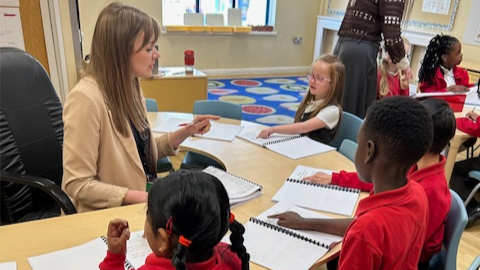
That was the question on my mind as I left San Diego and headed to the United Kingdom to visit schools implementing knowledge-rich curriculum, two of which use Core Knowledge.  

These were schools where technology was not the centerpiece. In some classrooms, tech was absent entirely. AI was barely part of the conversation, yet these UK schools answered that question more clearly than any conference panel could. 


The “last mile” problem is not new but still unsolved

In K–12 education, there have long been significant gaps between what the science of learning suggests is most likely to produce durable learning and what schools, systems, curriculum publishers, and edtech providers are incentivized to prioritize, develop, adopt, and measure. 

Teachers operate within systems that prioritize standards alignment, differentiation, engagement, and test performance. Publishers and edtech companies respond to those same incentives. The result is a marketplace flooded with standards-aligned materials and time-saving tools that may or may not reflect how students actually learn and retain knowledge over time. 

A curriculum can be standards-aligned yet still lack coherence, cumulative knowledge-building, explicit sequencing, meaningful retrieval practice, or attention to cognitive load. In many systems, “alignment” has become a proxy for quality, even though alignment alone does not guarantee coherent instruction or durable learning. 

A similar tension shapes “personalization.” Meeting students where they are matters, but when personalization fragments the shared knowledge base itself and sends each student down a different path, it can undermine the deep learning it aims to support, especially for students who struggle or start with less prior knowledge.

Yet in pockets across the system, this “last mile” problem is already being addressed — not primarily through software or platforms, but through people, practice, and sustained instructional leadership. 

School and system leaders like Gareth Rein in Wales and former Louisiana State Superintendent John White have helped create conditions where coherent curriculum, teacher development, and high expectations reinforce one another.  

Educators such as Olivia Mullins, Lauren Brown, Sean Morrissey, and many more are deeply engaging with cognitive science and translating it into daily classroom practice.  

Practitioners, advisers, and trainers like Meg Lee and Kristen McQuillan are helping bridge the gap between research and instruction in practical, actionable ways. 

At the same time, researchers like Tim Surma and his team in Belgium are partnering directly with schools and systems to demonstrate how coherent, knowledge-rich curriculum and evidence-informed instruction can support strong learning outcomes for students. 

These efforts are not theoretical. They are operational. They are happening in real schools with real students.  

But they are not yet consistent, sustained, or scaled in ways that make them the norm rather than the exception. 

That is the gap Melina Uncapher is pointing to. And it is the gap where AI is now poised to enter. Not as a neutral tool, but as a system that will encode and scale a theory of learning whether we are intentional about which one or not. 

Three Schools, Three Contexts, One Clear Pattern

In the United Kingdom, I visited three very different schools: 

  • St. Peter’s Primary School in Cardiff, Wales
  • TASIS England in Surrey, England
  • Michaela Community School in Wembley, England

Different student populations. Different models. Different leadership styles. Different cultures. 

And yet the pattern across them was strikingly consistent. 

What stood out was not just performance data or inspection outcomes, though all three perform strongly by relevant measures. 

It was the students. 

Students who engage actively and speak with clarity, curiosity, and confidence. 

Students who take visible pride in what they know. 


At St. Peter’s, one parent described the impact of leadership change in a way that has stayed with me:
 

“It has raised both the floor and the ceiling for all students.” 

That is not a slogan. It is a description of what happens when expectations, curriculum, and teaching quality align. 

Across all three schools, two things were consistently present: 

  1. Leadership with clarity and conviction

Strong leadership is not just managerial. It is cultural. 

It sets direction, aligns adults, makes expectations explicit, and creates consistency across classrooms. 

In these schools, the curriculum, pedagogy, teacher training, classroom routines, and leadership language all reinforced one another. There was coherence between what students were learning, how teachers were teaching, and what each school valued and supported. 

  1. A knowledge-building curriculum, taught with precision

When curriculum is structured, sequenced, and intentionally knowledge-rich, and when teachers are supported in delivering it well, the effects are visible:  

Students don’t just accumulate information. They build understanding. 

And more importantly, they develop expectations about themselves: 

  • “I can actually understand this.” 
  • “I can explain this.” 
  • “I am expected to know this.” 

That shift in expectation is one of the most powerful, and least discussed, drivers of educational equity. 

Because once students begin to expect success, to see themselves as capable of understanding demanding content, the ceiling changes. 

Not just for the highest attainers, but across the entire distribution. 


The 
Instructional Architecture Underneath
 

If AI is going to encode a theory of learning, the question is which theory. The educators and leaders walking the last mile are drawing on a body of work that has been remarkably aligned for decades. 

St. Peter’s head Gareth Rein jokingly calls it the “Four D’s”– four thinkers whose work has shaped much of the knowledge-rich curriculum movement, and where he often directs educators beginning to explore the connection between curriculum, instruction, and learning science. 

Don (E.D. Hirsch, Founder of Core Knowledge) has spent decades arguing that coherent shared knowledge is foundational to literacy, equity, and democratic participation. From Cultural Literacy to Why Knowledge Matters, his work reframed knowledge and curriculum as a matter of justice, not preference. 

Daniel Willingham has helped translate cognitive science into practical insights for educators. His core message is deceptively simple: thinking depends on knowledge. Memory is not a flaw in learning; it is the mechanism that enables it. Without prior knowledge stored in memory, new learning becomes dramatically harder, because new ideas connect to existing ones in the brain. 

Daisy Christodoulou, a former teacher turned author and edtech leader, has been an influential voice in challenging misconceptions about assessment, skills, and “learning styles,” particularly in the UK context. Her work consistently returns to a central idea: we often overestimate the value of generic skills and underestimate the role of domain knowledge. 

Doug Lemov brings something different but essential: a relentless focus on teacher practice. Through thousands of classroom observations, his work examines what effective teaching looks like in practice, down to the routines, questions, and techniques that shape learning moment by moment. 

This is not a fringe or random collection. It is a coherent, decades-old body of work about how humans learn, what curriculum should do, and what teaching looks like when it respects both. It is the foundation underneath what I saw in Cardiff, Surrey, and Wembley. And it is the underlying architecture AI would need to encode if it is going to amplify the last mile rather than route around it. 

Where This Leaves Us

The excitement around AI in education is real. So is the risk of overestimating what it can do in isolation. 

What feels more grounded, and more urgent, is this: 

The biggest constraint in education is not access to tools or information. 

It is the consistent implementation of what we already know about how learning works. 

Learning science is not new. Knowledge-rich curriculum is not new. Cognitive psychology is not new. 

The challenge has always been the same: getting it into every classroom, every day, for every student. 

If AI has a role worth paying attention to, it is not in replacing that work, but in helping close the gap between knowing and doing. 

So can AI help bridge the divide between what learning science suggests and what classrooms can realistically implement at scale? 

Or will AI simply amplify the incentives already driving the system — optimizing for engagement, speed, and hyper-personalized experiences rather than coherence, shared knowledge, memory, and long-term learning? 

AI will not eliminate theories of learning. It will encode and scale one. 

Used well, AI could ease one of education’s greatest challenges: the translation burden between research and practice. It could support curriculum coherence (Hirsch), retrieval practice (Willingham), assessment that measures durable knowledge rather than generic skill (Christodoulou), and feedback on teacher practice (Lemov) — while allowing teachers to focus more deeply on relationships, instruction, and student thinking. 

Most concretely, an AI built on this foundation would build knowledge cumulatively across a shared curriculum, with personalization layered on top rather than as a substitute for it. And it would know when to stop helping — letting students work through productive difficulty rather than smoothing every friction point in the name of engagement. Those two design choices would distinguish it from much of the edtech on the market today. 

The question is whether we will be intentional enough about the instructional architecture underneath AI before it scales and accelerates the system we already have. 

That “last mile” is still the frontier. 


Beth Anderson  5 min read · Apr 23, 2026


In March, I walked into a classroom in Lake Havasu Unified School District knowing this wasn’t a typical school system. 

It’s one of the only districts in the country to fully adopt the Core Knowledge curriculum, district-wide. 

But even so, I wasn’t prepared for what I saw.

What I saw was something harder to describe in slogans, but easy to recognize in practice. 

Students were talking to each other about what they had learned. Not repeating phrases. Not guessing. 

Explaining ideas clearly, using language that felt unusually precise for their age. 

Grade 5 Roundtable · Video courtesy of the Knowledge Matters Campaign

And most importantly: they expected to understand each other. 

That expectation changes everything. 

A system, not an exception 

What stood out quickly was that this wasn’t happening in one isolated classroom. 

It was happening across the district. 

As Shannon Williams, principal at Nautilus Elementary School, explained: 

“For the whole district to have one curriculum from kindergarten all the way up was huge.” 

That consistency matters more than it sounds. 

Because it removes randomness from what children experience year to year, and replaces it with progression. 


Teaching that feels different for teachers and students 

One of the clearest signals came from teachers themselves. Sixth grade teacher Jodi Grumet described the shift in classroom energy: 

“It’s more fun to teach when it becomes a group activity rather than me just spewing information.” 

That distinction is important. 

This isn’t about replacing teachers with materials. It’s about changing what classroom interaction is built on: shared knowledge. 

And that changes student participation too. As Kindergarten teacher Kelsey Gibbs put it: 

“Now they’re using that language because we’re giving them experiences that they wouldn’t otherwise have.” 

What students actually sound like when it works 

Across classrooms, the pattern was consistent: students weren’t simplifying ideas down. They were building them up. 

One teacher noted: 

“They were learning real content, and that is what impressed us so much about the curriculum.” 

Another added: “It’s not just this one class… they’re getting it across the board.” 

And perhaps most tellingly, a teacher reflecting on long-term impact said: 

“Wait until you get these kids. The level of knowledge coming into your high school is going to be much different.” 

That’s not a small shift. It’s a trajectory change.

Why this matters beyond one district 

What Lake Havasu demonstrates is not a unique talent pool or exceptional circumstance. 

It is what happens when: 

  • curriculum is coherent
  • expectations are shared  
  • and knowledge is treated as something cumulative, not optional  

Students begin to: 

  • speak with more clarity
  • engage in more sustained discussion
  • and write with more confidence  

And teachers regain something often lost: shared purpose across grade levels. 

Understanding the CK approach 

You’re not alone in asking questions like: 

  • What would happen if students built knowledge year after year without gaps?
  • What changes when classrooms are anchored in shared content, not isolated lessons?  
  • How do we make learning more coherent without making it more rigid?  

If you want to see what this looks like in practice, start here: 

These are the same kinds of materials that underpin what you’ve just read. 

For schools thinking about next steps 

Some schools are now choosing to go further.

Using CK’s free downloadable and low-cost, high quality print materials is one step.

Aligning schools with a broader community of practice is another. 

We’re currently inviting schools to join as Core Knowledge Affiliate Schools as part of the CK Network. 

Joining the network is free, and it provides: 

  • recognition of commitment to knowledge-rich education
  • access to digital assets for your school community
  • updates, opportunities, and shared learning across schools  

A final reflection from the visit 

What stood out most in Lake Havasu wasn’t any single initiative. It was coherence. 

Students, teachers, and leaders all operating from the same idea: that knowledge is not something to sprinkle in.

Knowledge is the foundation everything else builds on

If that feels like a conversation your school is already having, or should be having, we’d love to stay connected.

Subscribing to our newsletter keeps you equipped with the latest resources to confidently build knowledge in your young learners.

Core Knowledge is rolling out new and updated resources this spring to help schools deepen content knowledge, expand access to the arts, and make history and civics come alive for students nationwide.

New Arts Curriculum: Music and Visual Arts

The new Core Knowledge Music and Visual Arts curricula for grades K–8 give students rich opportunities to listen, sing, play, move, and create while building knowledge of music theory, notation, art concepts, and art history. These programs spotlight classic and contemporary artists, architecture, and diverse musical genres, and are designed for joyful, knowledge-building classroom experiences.

CK in Your State History

This spring, Core Knowledge is also introducing “CK in Your State History” resources for Arizona, California, Colorado, Minnesota, North Carolina, and Utah. These materials connect Core Knowledge’s content-rich approach with each state’s unique historical figures, events, and civic institutions, helping teachers integrate local history into a coherent K–8 knowledge sequence.

Free Library: New Titles

The Core Knowledge Free Library will expand with new titles that provide ready-to-use, content-rich texts for classroom instruction and independent reading. These additions give teachers more flexibility to support background knowledge, vocabulary, and reading comprehension across subjects.

New Louisiana History Curriculum

Land of Liberty is a new high school U.S. history curriculum developed with the Louisiana Department of Education to support the 2022 Louisiana Student Standards for Social Studies. Its units integrate history, geography, economics, and civics to help students build broad, deep knowledge of the United States. The six units, published in two volumes, cover U.S. history from Jamestown through the 2008 election of Barack Obama.

Declaration of Independence Activities

This year marks the 250th anniversary of the Declaration of Independence, offering a powerful opportunity to highlight its ideas and legacy with students all year long. New Declaration of Independence activities provide teachers with flexible, ready-to-use resources to explore the document’s language, historical context, and enduring principles through close reading, discussion, and writing. These materials are designed so educators can weave meaningful, age-appropriate celebrations of the Semiquincentennial into their instruction throughout the year, helping students connect the founding ideals to their own lives and communities.

To explore these upcoming releases and download free materials as they become available, visit our website or follow us on our social media channels.

Facebook: https://www.facebook.com/CoreKnowledgeFoundation/

Instagram: https://www.coreknowledge.org/community/

LinkedIn: https://www.linkedin.com/company/core-knowledge-foundation

Pinterest: https://www.pinterest.com/coreknowledgefoundation/