Default image for pages

Our interviewee, Nonnie Cullipher, serves as Implementation Support Manager at the Core Knowledge Foundation. Sherlock Holmes is a legendary fictional detective created by Scottish author Sir Arthur Conan Doyle. You can meet him in the Grade 5 Core Classics® Series, free to download here. 

Sherlock Holmes: Good day, all. Sherlock Holmes, at your service! In my constant pursuit of facts, evidence, and the occasional elusive truth, I have invited one of the Core Knowledge Foundation team members, Nonnie Cullipher, to assist me in examining a curious modern classroom mystery. And so, as I am fond of saying, “The game is afoot.” * 

Nonnie Cullipher: Hello, Mr. Holmes. I’m pleased to be here, and I hope I can provide a little insight. 

Sherlock Holmes: “To a great mindnothing is little.” ** Now then, I have heard the phrase “bringing books back to the classroom,” and it presents a most peculiar puzzle. Did the books vanish? Were they misplaced? 

Nonnie Cullipher: Well… not exactly.  

Sherlock Holmes: If so, I assure you I have some experience in recovering what others have overlooked!  

Nonnie Cullipher: I’m glad to say books never disappeared. I think what you are referring to is a growing conversation in schools about the role of technology in classrooms. 

Sherlock Holmes: “It is a capital mistake to theorize before you have all the evidence.” *** And yet, in this instance, Miss Cullipher, your deduction is sound! Tell me, then: do schools now regret the use of these “screens,” as you Americans call them, within the classroom? 

Nonnie Cullipher: I’d say it’s more layered than that. Like most classroom decisions, it depends on the students, the lesson, and the purpose. I’m one educator, and there are experts studying this from many perspectives… 

Sherlock Holmes: Precisely! Evidence first, conclusion second. Observe the facts, arrange them properly, and the truth will usually reveal itself! 

Nonnie Cullipher: In general, the conversation seems to be shifting. It is not really about choosing books or screens. It is about using technology wisely, intentionally, and selectively. Computers can give students access to a wide range of resources, support collaboration, and provide accessibility tools. And of course, students need to be prepared to use technology beyond school. 

Sherlock Holmes: Facts! Excellent. Well-ordered facts are as satisfying as a footprint in wet clay. 

Nonnie Cullipher: But Mr. Holmes, didn’t you also say, “There is nothing more deceptive than an obvious fact”? **** The obvious fact is that technology can be useful, but there are also concerns.  

Sherlock Holmes: Go on! 

Nonnie Cullipher: Too much screen time can affect attention, focus, sleep, social development, reading stamina, and mental and physical health. Younger learners already spend a great deal of time on screens outside of school, so many educators are trying to protect and increase time for direct instruction, sustained reading, writing, discussion, and hands-on learning during the school day. 

Sherlock Holmes: Intriguing!

Nonnie Cullipher: Yes, and this issue matters just as much in middle and high school. It’s complicated, and educators and parents need to keep learning from research and classroom experience to make the best decisions for students today.

Sherlock Holmes: Quite right. As with any investigation, the answer is rarely as simple as it first appears. 

Nonnie Cullipher: Precisely, and speaking of investigations, I’m afraid I must be on my way, Mr. Holmes. I just heard that a long-lost collection of stories about Sir Gus, a brave and honorable knight, has been found in the ruins of an old castle. There’s still so much we don’t know about him, and I, like you, can’t resist a good mystery! 

Sherlock Holmes: The case is not closed; we must follow the evidence wherever it leads and attend closely to what enables students to think deeply, collaborate wisely, create with purpose, and communicate with clarity. Teachers and parents, your classrooms are laboratories of thought. May your observations be sharp, your evidence sound, and your conclusions worthy of the case!

Quotes & References 

* The Return of Sherlock Holmes, 1905 

**A Study in Scarlet, 1887 

***A Scandal in Bohemia, 1891 

**** The Boscombe Valley Mystery, 1891 


5 min read · Jun 30, 2026

 How one Core Knowledge family keeps the learning going during the summer months

School’s out! The backpacks are in the closet. And in a sunny Virginia home, Amy Hibshman‘s kids are still reading, because they want to. 

Amy is part of the Core Knowledge Foundation team. This summer, she’s been reading with her kids, Coleson (11) and Kayla (7) most days, no schedule required. 

Her children have been spending time each day with titles from the Core Knowledge Free Library, sometimes together, sometimes snuggled up with Mom. 

“One of my favorite moments this summer,” Amy explains, “has been hearing both Coleson and Kayla say things like, ‘I learned about this in school!’ while reading their books. Those connections between what they were reading and what they had already learned helped reinforce the content and made it feel more connected.” 

“The digital books are wonderful for traveling as a family,” she continues, “If you have a Wi-Fi hotspot, you can take your entire library with you instead of packing a stack of books.”  

One memorable connection came after the family visited an old mining town in Georgia during their vacation. Inspired by the trip, they began reading Adventures in History: The Gold Rush together. 

“It was a great way to connect our travels with what they were learning,” Amy reflects. 

What Is the Core Knowledge Free Library? 

The Core Knowledge Free Library is a growing collection of free digital books for children in preschool through grade 8. 

Titles span history, biography, world cultures, and literature, all connected to the Core Knowledge Sequence, the research-backed, grade-by-grade curriculum framework developed by E.D. Hirsch, Jr. 

There are three main series: 

  • CK Voices in History™ – narrative biographies of remarkable figures like Harriet Tubman, Marie Curie, Benjamin Franklin, and Jackie Robinson 
  • CK Adventures in History™ – historical fiction following young protagonists through real events like the Gold Rush, the Trail of Tears, and World War II 
  • CK Collection of Tales™ – folktales and stories from Latin America and the Caribbean, with more collections on the way 

Titles are available at no cost, readable on any device. No subscriptions, no late fees. 

For homeschooling families, the Free Library is especially useful because the titles align naturally with the Core Knowledge Sequence across grades K–8. 

They work beautifully alongside Core Knowledge Language Arts (CKLA) and Core Knowledge History & Geography (CKHG), or on their own, enriching independent reading. 

Reading Together, and Reading Alone 

One of the things that makes Amy’s summer reading setup so replicable is how flexible it is. 

Some evenings, she sits with Coleson and Kayla on the couch and reads together, a moment that’s as much about connection as it is about comprehension. 

Other times, Kayla disappears into her reading nook, a little fort with fairy lights and a rainbow blanket. She has been learning about Helen Keller, and the glow of the screen on her face says everything: she is in it. 

Coleson, a little older, has been working through Voices in History biographies on the laptop, including Thomas Edison and Benjamin Banneker, sometimes at his desk in the evening, sometimes at the kitchen table with the summer trees visible through the window behind him. 

Why Read Alouds Still Matter (Even in Summer) 

For younger readers, the research behind the Core Knowledge approach is clear: read alouds are one of the most effective literacy tools available today. 

Thomas Sticht’s landmark analysis of listening and reading comprehension found that children’s ability to understand what they hear outpaces their ability to understand what they read independently, all the way through the middle school years. 

That’s worth remembering even as kids get older: Coleson is past the age where read alouds might seem necessary, but the same research suggests his listening comprehension still outpaces his independent reading, which is part of why family read-aloud time stays worthwhile well beyond the picture-book years. 

That means when Amy reads to Kayla, she isn’t just spending time with her daughter. She’s exposing her to richer vocabulary, more complex sentences, and deeper content knowledge than Kayla could yet access alone on the page. 

According to the Core Knowledge Sequence, this kind of rich read aloud experience, followed by real conversation about the story, is foundational to building the listening comprehension and background knowledge that children need to become strong independent readers later.  

The Knowledge That Opens Doors 

E.D. Hirsch, Jr. spent decades making the case that reading comprehension isn’t just a skill; it depends on what you know. 

A child who has heard stories about the Civil War, ancient civilizations, or famous scientists doesn’t just have interesting facts in their head. They have the background knowledge that makes future reading, and future learning, click into place in a way it simply can’t without that foundation. 

Summer is a natural opportunity to build that knowledge base. Not through worksheets or test prep, but through good stories. 

The Free Library titles are designed to do exactly that, to connect children to the big ideas, events, and people that the Core Knowledge Sequence identifies as essential building blocks for educated, engaged citizens. 

Try It This Summer! 

You don’t need a plan or a schedule, just fifteen minutes and a device. 

The Core Knowledge Free Library is free, always open, and full of stories worth reading, whether your child curls up with a tablet in a reading fort or settles in at the kitchen table with an older sibling. 

4 min read · Jun 25, 2026

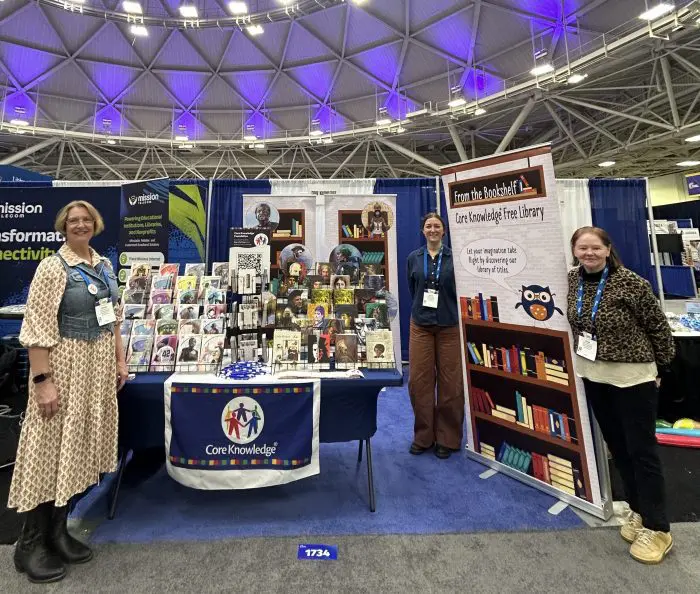
At the Public Library Association Conference in Minneapolis this spring, Core Knowledge Foundation’s Free Library team of Rosie McCormick and Sophie Nunnally heard the same question repeatedly.  

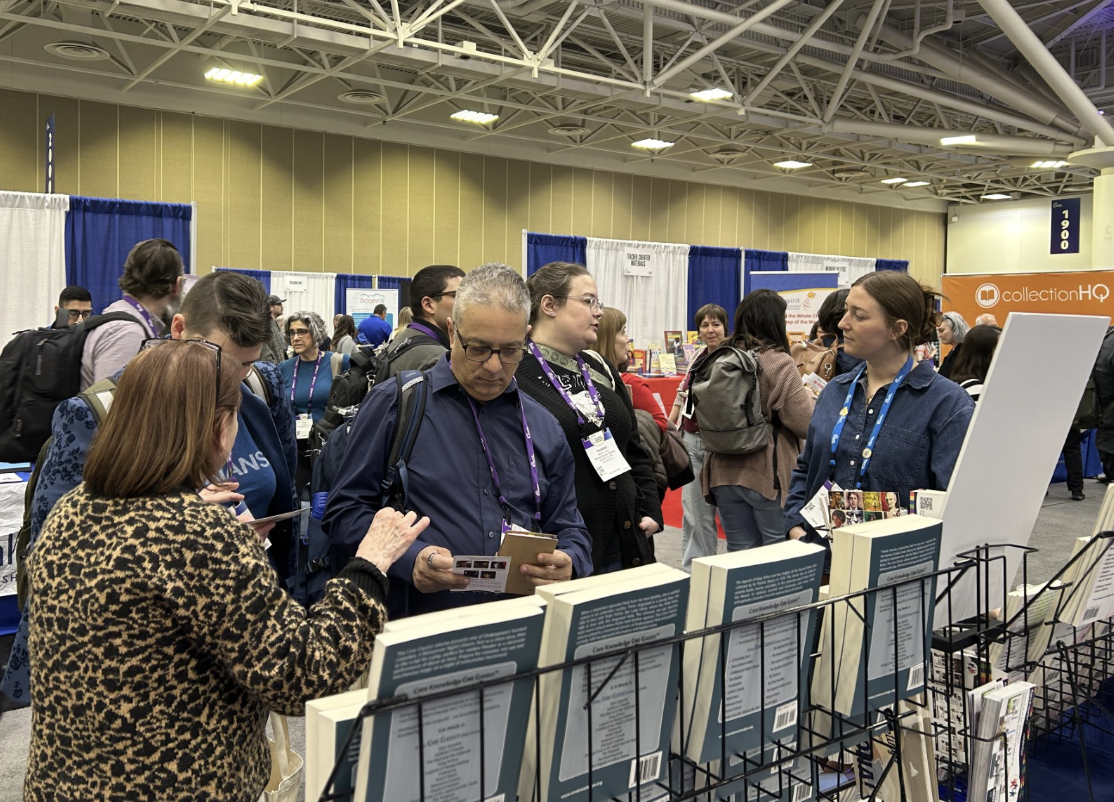
A librarian would stop at the Core Knowledge booth, start leafing through one of the books on display. The illustrations drew them in, but they quickly became immersed in the subjects and the writing.  

Eventually, they would ask: 

“Where can I access these books?” 

And when they heard that everything was freely available online, no subscription, no login, no limited access, there was often a brief pause of genuine surprise, because resources like this rarely operate that way anymore. 

What the Free Library actually is 

The Core Knowledge Free Library is a curated digital collection of complete books for young readers: historical narratives from the War of 1812 to the Tang Dynasty, biographies of figures from Vincent van Gogh to Cleopatra, and stories connected to science, geography, and the wider world.  

The collection currently includes forty titles written and illustrated by respected children’s authors and illustrators, among them Nancy ChurninKathryn ErskineGlenda ArmandAnne Marie PaceChristopher Thornock, and Adam Gustavson. All titles are complete, carefully commissioned works — not abridged excerpts or leveled fragments – explicitly designed to help children strengthen both reading habits and knowledge of the world around them.  

Later this summer, several titles will be available as audiobooks, alongside a redesigned, more user-friendly website, expanding access in ways that matter especially for families without books readily at home. Most titles are also available in affordable print editions for libraries, classrooms, and families who want physical books. 

What PLA revealed 

The Public Library Association Conference drew over 6,000 attendees and focused heavily on questions of access, equity, outreach, and the evolving role of libraries in public life. 

Rosie and Sophie attended alongside educator and CK Implementation Support Manager Nonnie Cullipher, displaying the Free Library interactive website alongside physical copies of several titles and selections from Core Knowledge’s Core Classics collection. 


Some school librarians recognized the curricular connections quickly as many of the books align directly with historical periods and topics students encounter in class, especially for those using Core Knowledge History and Geography (CKHG) or Core Knowledge Language Arts (CKLA) 

But public librarians saw something broader.   

Repeatedly, conversations turned toward: 

  • homeschool communities
  • summer reading initiatives 
  • English language learners 
  • rural outreach 
  • underserved urban communities 
  • family literacy programs 
  • adult learners rebuilding reading confidence  

Several librarians described digital licensing costs as one of the defining pressures facing public libraries today, particularly for ebooks and audio resources. 

More than one person said a high-quality digital library that placed no restrictions on access was something distinctive and invaluable that they’d genuinely been looking for, or wished they had been. 

Reading with something to recognize 

The idea that comprehension depends not only on reading skill, but on sustained exposure to language and knowledge over time, has long been central to the thinking behind Core Knowledge. 

Core Knowledge Founder Dr. E. D. Hirsch Jr. has written often about what’s at stake when children aren’t given sustained exposure to language and ideas: 

“If we do not spend large amounts of time reading aloud and discussing challenging material with children, material that is well beyond their ability to decode with understanding, we miss a critical opportunity to increase their knowledge of language and of the world, the kind of knowledge that will prove decisive for reading in later years.” 

The forthcoming audiobooks reflect that principle directly, built for exactly the kind of read-along and read-aloud use Hirsch describes. But librarians, teachers, family members, and friends can play that role, too. 

Teachers see the effect in practice. When students encounter a topic they’ve come across before – a historical figure, an event, a place – comprehension improves, but so does something harder to measure: confidence. A child who already knows  something about Vincent van Gogh reads about him, and art history, differently than a child who doesn’t.

Quiet growth worth noting 

In early 2025, the Free Library had several hundred users. In the same period this year, that number exceeded 7,000, an increase of nearly 1,000 percent.  

And yet, throughout the PLA conference, librarians encountering the collection for the first time kept asking the same question: 

“How have I not heard about this before?” 

A new partnership and a resource for all 

One concrete outcome from Minneapolis: after a conversation at the Association for Rural & Small Libraries (ARSL) booth, the Core Knowledge Foundation has become an ARSL member. The two organizations will begin exploring collaborative work, particularly in underserved communities where free, high-quality educational resources are most needed.  

That conversation reflected something that animated so many of the conversations at PLA. Attendees moved quickly from discovery to excitement to practical application. Summer reading programs. Home-school read-aloud routines. Classroom extensions and independent learning. Family access for students without books at home. 

For schools already using CKLA or CKHG, the collection is a natural complement, with science titles to supplement CKSci coming next year. But it also stands on its own for anyone who believes children benefit from reading substantial, engaging books connected to history, science, culture, and the wider world – freely available, and affordable in print.

Our interviewer, Rosie McCormick, is the author of Sir Gus and the Director of the Core Knowledge Free Library. Sir Gus is a fictional knight of the realm. You can meet him in the CKLA Grade 2 Student Book, free to download here.

Rosie McCormick: Thank you, Sir Gus, for agreeing to talk with me today.

Sir Gus: You are most welcome. Besides, the king insisted!

Rosie McCormick: I hear you are a great lover of books.

Sir Gus: Indeed, I am! You see, ever since  Johannes Gutenberg invented the printing press, books have become more widely available. The king himself has a well-stocked library. I will confess, I sometimes hide in the library rather than participate in the jousts.


Rosie McCormick: You do?

Sir Gus: I do. I have found a special spot in the astronomy and natural philosophy section of the library that is quite secluded. I even sat out the last battle with the Monsters from the Deep there. But I did learn a thing or two about navigation and was able to teach my fellow knights how to use the night sky to guide their way.

Rosie McCormick: I see! I imagine that you think reading is important?

Sir Gus: Oh, most important. One can learn SO much from books; they are truly wonderful companions. A good book can transport readers to faraway places, or teach them about the heavens, or anatomy, or poetry! And of course, there are the wonderful tales of Ancient Greece and Rome.

Rosie McCormick: You are a learned knight, Sir Gus!

Sir Gus: Thank you, good lady! I will add that summertime is perhaps my favorite time of year to enjoy a good book. There’s nothing better than sipping a goblet of pear juice on a warm summer’s day, while reading a good book. An adventure tale, not a scary one of course, makes for the very best kind of day!

Rosie McCormick: You’ve given me an idea for my summer break!

Sir Gus: And for that I am glad! Ay me, is that the time? Alas, I can tarry no longer. I hear my fellow knights, their armor rattling and clattering as they dress for battle. I must take up my spot in the king’s library, and hope that no one finds me there. Good day to you, Rosie!

Rosie McCormick: Thank you, Sir Gus! It’s been a real pleasure. And for the young readers among us, I happen to know that the Core Knowledge Foundation has a wonderful Free Library online full of compelling biographies, gripping historical stories filled with adventure and intrigue, and tales from Latin America.

Step into the pages of these fabulous books and allow them to whisk you away! A summer reading journey awaits you.

4 min read · Jun 1, 2026

It’s summer, and you know what that means: it’s time for an adventure! Where will you go?

To Paris, to learn from the passion and genius of the master painter Vincent van Gogh?

To Amsterdam, to bike at full speed along the cobbled streets on a top-secret mission?

Or an afternoon in a mythological world dining with a friendly stork and a trickster fox?

Curl up with one of our biographies, fictional stories, or tales from around the world, and you’ll go farther than you ever dreamed. Just ask Core Knowledge’s Amy, whose family makes summer reading a special part of their season with the Free Library.

Try a book a week; the more stories you read, the more places you’ll go!

Ready?

Image courtesy of Shutterstock