CKSci Unit 6: Cells and Systems
Focus:
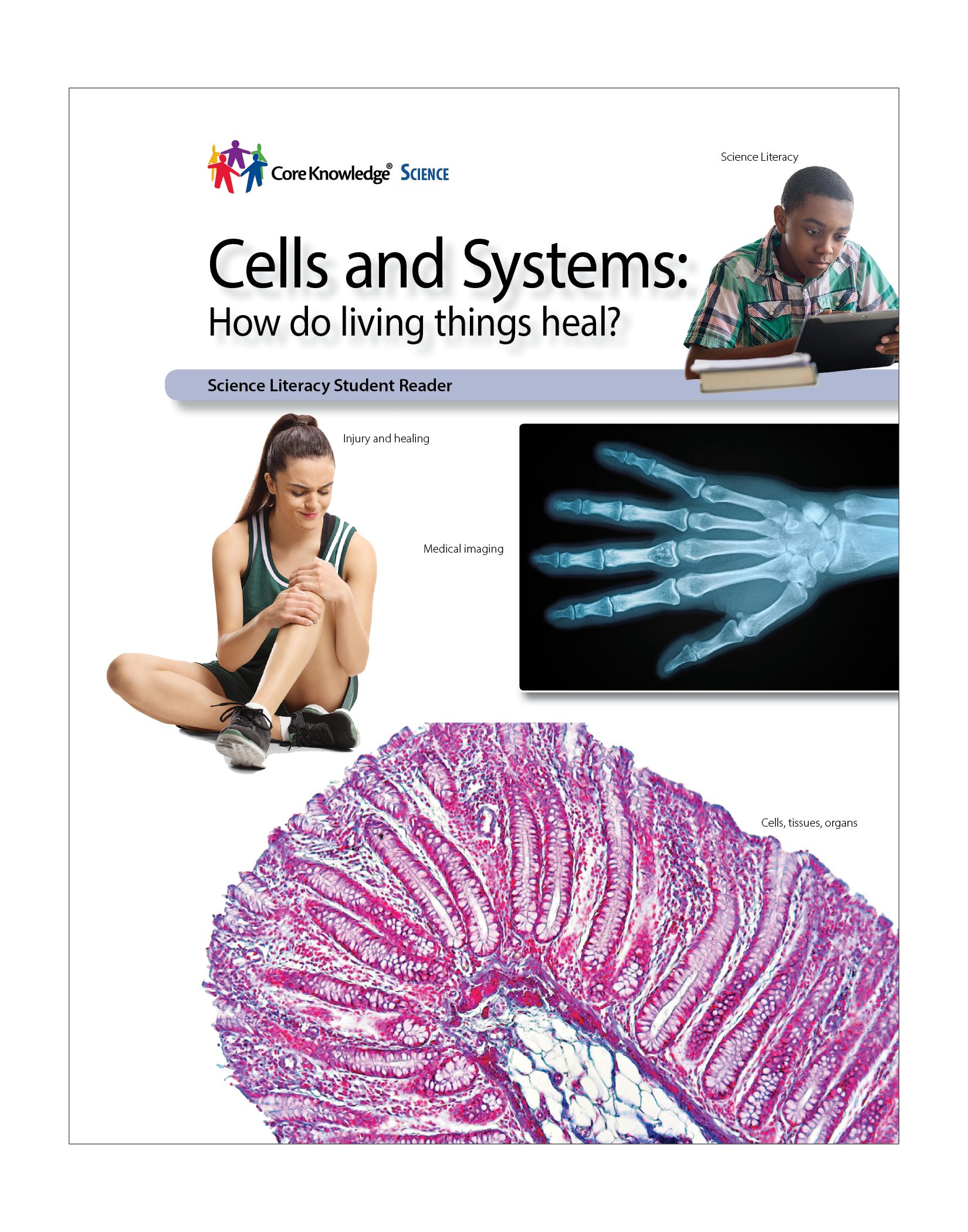
In this unit, students investigate the phenomenon of healing. More than that though, students examine the nature of the human body and the systems and cells that comprise it. The subtitle of this unit is How do living things heal? Phenomena such as the healing of a cut, a scrape, or a broken bone are things that students have some experience with from everyday life. But how does the body go about this healing process? What are the steps, and which systems are involved? What is the role of cells and tissues, or nerves and blood in healing? How is the process of growth like that of healing? How can this knowledge be applied to helping those with physical disabilities? Students then spend time working with classmates to analyze their shared experience, formulate new questions, and develop new strategies for answering them. Students explore concepts that include the following:
- What do our bones, skin, and muscles do for us?
- How can medical images and diagrams help us figure out more about the structures in our body?
- Why is there blood in all these places in the body?
- Why do the moon and sun appear to change color near the horizon?
- What will we see if we look at skin, bone, and muscle with the microscope, too?
- Are all things made of cells?
- How can shifting our perceptions of ability and disability allow us to be more thoughtful about how we make our environments more accessible?
As students move through their day-to-day activities, they will also read Core Knowledge literacy selections. These include factual articles, history of the sciences, art and literature, spotting bad science in the media and advertisements, graphics comprehension, research-type articles, reliability of sources, and other areas of science literacy.
Number of Lessons:
- Teacher Guide: 14 Lessons
- Student Reader: 3 Collections
Instruction Time (Student Reader):
- Lessons are designed to be completed in one or more class periods.
- A Pacing Guide found in Online Resources offers a suggested time to complete the entire unit if class is held each day.
- The entire unit should take about 25 days to complete if class is held each day.
- A complete list of Materials needed to complete the unit is provided in Online Resources.
Additional Search Terms:
science literacy • human body • healing • cells • body systems • tissue • amputation • exoskeleton • endoskeleton • orbit • sensory systems • metabolism • MRI • X-ray • CT scan • stem cells • nonfiction • informational text